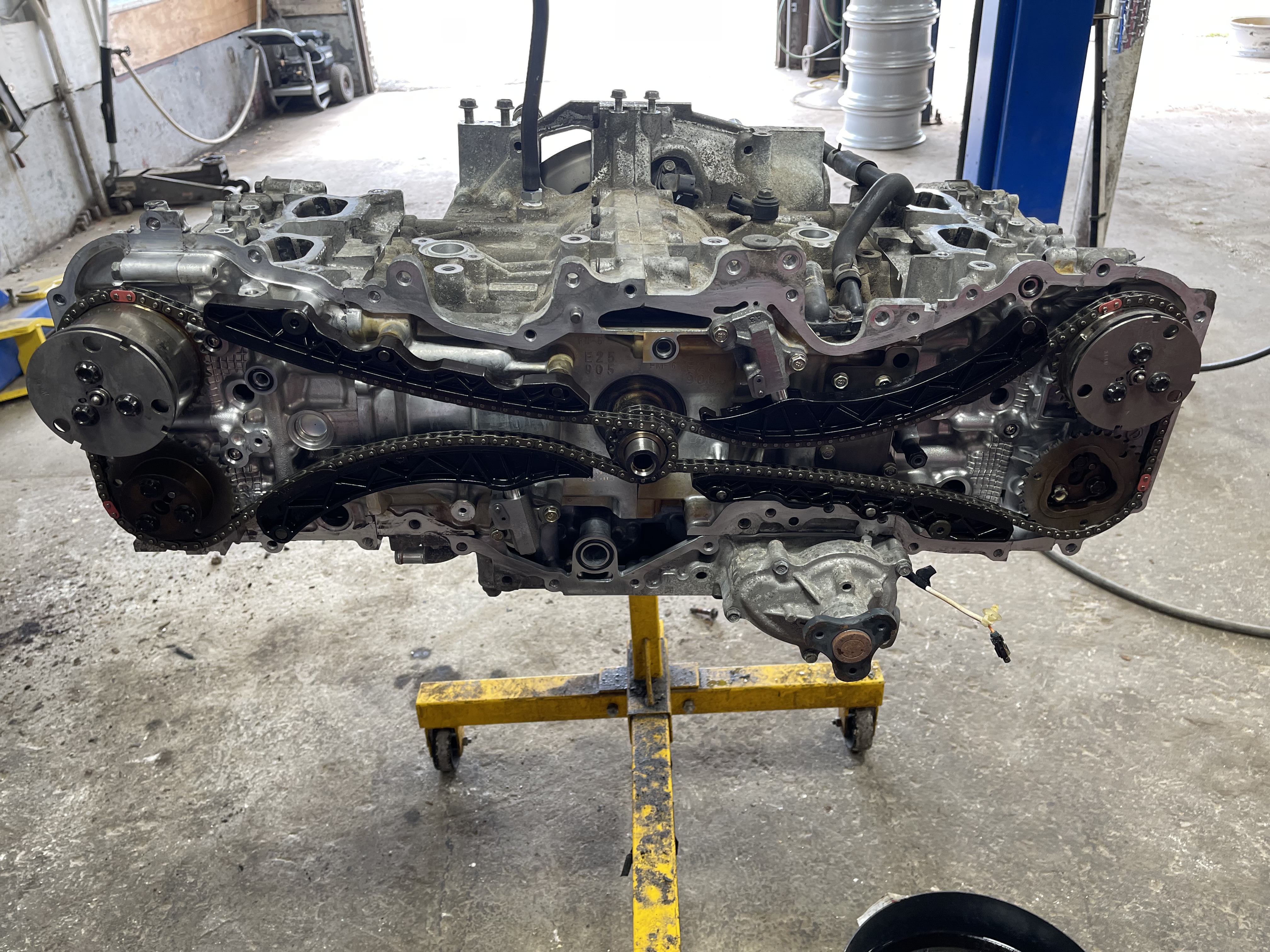
See recent work from our Granby, CT shop: engine reseals, engine rebuilds, valve jobs, and frame replacements. Learn symptoms, diagnosis, and how we repair it right for Hartford County drivers.
Check out these recent jobs from the team at College Highway Auto in Granby, CT. We’ve had a full calendar of big mechanical and structural work: engine reseals to stop persistent leaks, full engine rebuilds on high-mileage vehicles that still have good bones, precision valve jobs to restore power and smooth idle, and frame replacements to fight back against New England rust. If you’re in Hartford County or nearby towns like Simsbury, Suffield, East Granby, Windsor Locks, or over the line in Southwick, MA, this page gives you a real peek at how we approach complicated repairs and how we decide what’s worth saving on your vehicle.
Think of this as a guided tour through our recent projects, with honest explanations of when we recommend a reseal vs. a rebuild, how we confirm a worn valve train vs. a bottom-end issue, and what it takes to safely tackle a frame swap on a rusted truck or SUV. We’ll walk through symptoms we see, the diagnostic process we follow before a wrench gets turned, and the repair steps that deliver safe, long-lasting results. No guesswork, no parts-cannon—just the methodical approach you’d expect from a professional Granby shop that works on these jobs week in and week out.
Wondering if your vehicle might need the level of service you see in our recent jobs? Here are the real-world symptoms that cause drivers to reach out to us:
Engine reseal candidates: - Oil spots under the car after parking overnight, leaving a steady drip on the driveway - Burning oil smell after short trips, sometimes with light smoke from the exhaust or from oil contacting hot components - Oil level dropping between fills, but engine still runs well and compression is healthy - Messy, wet oil pans, timing covers, valve covers, or rear main areas
Engine rebuild candidates: - Noticeable knocking or deep lower-end noise, especially under load - Low compression or uneven compression across cylinders - Excessive oil consumption or blue smoke that a reseal won’t solve - Metal in the oil filter or drain pan - Loss of power accompanied by poor fuel economy and misfires that aren’t ignition-related
Valve job candidates: - Rough idle, misfires, or a choppy feel that gets better at higher RPM - Hard starting and low vacuum readings - Compression that improves with a wet test, or a cylinder leak-down test that shows loss through the intake or exhaust - Ticking or tapping noises from the top end, plus sooty exhaust tips or fuel smell from incomplete burn
Frame replacement candidates: - Failing state inspection or safety check due to severe rust perforation - Visible holes, soft spots, or flaking scale on frame rails and crossmembers - Suspension geometry that won’t stay aligned due to structural rot - Clunks and creaks from compromised mounting points, especially on trucks and SUVs that have seen many winters in Hartford County and the Farmington Valley
If any of these ring a bell, you’re not alone. Our climate, road salt, and the mix of daily driving plus towing or hauling can stack up quickly. The good news: each of these issues has a clear, testable path to a correct repair—once we diagnose it properly.
No two vehicles arrive with the exact same story. That’s why we start with a conversation and a structured inspection, then test to confirm the failure before recommending repairs.
How we confirm an engine reseal vs. something bigger: - We clean the exterior of the engine and add UV dye to the oil, then run the vehicle to trace the true source of leaks with a UV light. This avoids misidentifying seepage from above as a rear main or oil pan leak. - We measure crankcase pressure and check PCV operation; a restricted PCV system can push oil past seals and gaskets. - We verify engine health with compression and, when helpful, leak-down testing. If the bottom end is tight and the top end checks out, a reseal is likely the right move.
How we diagnose valve train concerns: - We run a cylinder compression test and follow it with a leak-down test to pinpoint where air escapes: intake, exhaust, crankcase, or cooling system. - We use a borescope to inspect cylinder walls and valves where access allows. - We monitor fuel trims, misfire counters, and vacuum readings; we also listen with a stethoscope to differentiate valvetrain tick from injector clatter. - We evaluate cam timing on engines with timing chains or belts—valve sealing won’t look right if timing is off.
How we determine if a rebuild is warranted: - Low oil pressure hot at idle, bottom-end noise, or significant bearing material in the oil are red flags. - Consistent low compression, scarred cylinder walls, or out-of-round bores point to a rebuild or a reman long block rather than piecemeal fixes. - We discuss vehicle condition, mileage, and ownership plans. If the body and frame are solid and the vehicle suits your needs, a rebuild can be a great value compared to replacing the vehicle.
How we assess frame integrity: - We lift the vehicle safely and inspect all frame rails, crossmembers, spring mounts, control arm mounts, and steering box areas. - We tap test questionable sections, probe scaling for underlying softness, and note any prior patch work. - We measure ride height and look at tire wear for signs of structural sag or misalignment. - We document with photos so you can see exactly what we see. In some cases, reinforced repair sections are appropriate; in others, replacement of the frame or major sections is the only safe choice.
At every step, we avoid assumptions. We don’t recommend replacing parts until testing shows the failure. For larger jobs, we provide a prioritized plan and a written estimate so you know where your money is going and how we’ll validate the fix.
Engine reseals: clean, prep, seal correctly - Preparation: After confirming the leak source, we degrease and pressure wash the area so new sealant adheres properly. We disconnect the battery and protect harnesses and connectors. - Disassembly: Depending on the leak, we may remove the timing cover, oil pan, valve covers, cam seals, crank seals, or rear main. We carefully note fastener locations and torque specs—many engines use mixed-length bolts. - Surfaces and sealants: We clean gasket surfaces to bare metal, check for warpage with a straightedge, and use the correct anaerobic or RTV sealant in manufacturer-specified locations. We avoid over-sealant use that can clog pickup screens. - Reassembly: We torque fasteners in sequence and to spec. On timing covers and pans, we allow proper cure times before adding oil. We replace related wear items while in there (timing components or PCV parts if indicated by testing), but we do not upsell what you don’t need. - Verification: We refill with fresh oil and filter, run the engine to temperature, and re-check with UV light to confirm a dry repair. We also road test and re-inspect after heat soak.
Engine rebuilds: doing it once, doing it right - Teardown and inspection: We remove and disassemble the engine on a clean bench, label components, and document wear patterns. We measure bearings, journals, bores, deck, and head flatness. - Machine work: We partner with trusted machine shops for boring/honing with torque plates when indicated, crank grinding/polishing, head resurfacing, guide and seat work, and pressure testing. - Parts selection: We use quality pistons and rings, bearings, gaskets, timing sets, oil pumps, and seals. Where appropriate, we prefer updated designs that address known weak points. - Cleanliness: We hot-tank and thoroughly wash oil galleries, replace core plugs, and verify passage cleanliness before assembly. Assembly lube is applied correctly, and torque-to-yield bolts are replaced. - Assembly and timing: We measure clearances, ring end gaps, and verify cam/crank timing marks. We prime the oiling system before first start. - First start and break-in: We monitor oil pressure, coolant temps, and check for leaks. We advise a careful break-in with early oil and filter service. For most engines here in New England, we favor high-quality full synthetic 5W-30 once the break-in procedure is complete and regular 3,000-mile oil changes to keep internals clean.
Valve jobs: restoring sealing and smoothness - Head evaluation: We remove the cylinder head(s), pressure test for cracks, and check flatness. Valve guides and seats are measured and corrected as needed. - Precision seat work: We cut or grind seats and valves to the proper angles, set the correct valve margin, and verify concentricity. We replace valve stem seals and any worn springs or retainers. - Reassembly: We confirm installed heights and spring pressures, set lash where adjustable, and ensure cam timing is spot on. We replace head gaskets and torque in sequence. - Validation: Post-repair compression and leak-down numbers are recorded, and a road test confirms smooth idle, stable trims, and restored performance.
Frame replacements: structural integrity first - Planning and sourcing: We identify the correct replacement frame or major sections—OEM, new aftermarket, or rust-free used when appropriate and safe. We verify compatibility down to bracketry and VIN-related considerations. - Support and swap: We support the powertrain and body safely, disconnect lines, harnesses, and mounts, and transfer components to the new frame with new hardware where required. Brake and fuel lines, mounts, and bushings are replaced as needed. - Rust mitigation: Before installation, we treat and coat internal frame sections and cavities with rust-inhibiting products to extend service life. - Alignment and calibration: After assembly, we perform a four-wheel alignment and calibrate any steering angle sensors or ADAS components that require it. We road test for noise, vibration, and handling concerns. - Documentation: You’ll receive photos of the process and a checklist of torque-verified fasteners and replaced parts.
Quality control you can feel - We document torque specs, sealant locations, and critical measurements on your repair order. - We perform hot and cold leak checks and verify fluid levels after cool-down. - We recheck fasteners that require post-heat cycles where specified by the manufacturer. - Finally, we invite you to stop back in for a quick courtesy re-check after a week of driving if you’d like a second set of eyes on things.
Why invest in this level of repair? Because safety, reliability, and total cost of ownership matter—especially in Granby and Hartford County where winter salt, temperature swings, and hilly roads punish vehicles.
- Stopping leaks protects the engine and the environment. Oil on a hot exhaust is a fire risk; low oil levels cause expensive bottom-end wear. A correct reseal stops the drip and preserves the engine you already own. - Rebuilding a strong platform can beat buying another car. If your vehicle is paid off and the body is solid, rebuilding the engine or refreshing the top end often costs less than replacing the vehicle and spares you the unknowns of the used market. - Valve sealing isn’t optional. Poorly sealing valves rob power, burn fuel, stress catalysts, and can snowball into bigger problems. A precise valve job restores smoothness and efficiency. - Frames are the backbone of safety. Rusted frames compromise crash protection and make alignments impossible. A proper frame replacement returns safety margins and extends the life of a well-loved truck or SUV that still meets your needs.
Our philosophy is simple: test first, repair with purpose, and verify the result. We’ll tell you when a small fix will do, and also when it’s time to make a bigger move. You’ll get options you can trust, explained in plain English, and grounded in what we’ve seen work for drivers in Granby, Simsbury, Suffield, East Granby, Windsor Locks, and surrounding towns.
Pro tip for New England driving: conservative maintenance pays off here. Short trips, temperature swings, and salt are hard on vehicles. We favor high-quality fluids and 3,000-mile oil changes to keep engines clean and seals healthy, and we recommend periodic underbody washing and rust protection to slow frame corrosion.
We start with testing. If your engine runs well, has good compression and oil pressure, and the main issue is external oil leaks, a targeted reseal is usually the right fix. If compression is low or uneven, you have bottom-end noise, metal in the oil, or high oil consumption that testing shows is due to worn internals, we’ll discuss a rebuild or a reman long block. We’ll show you test results and photos so you can decide with confidence.
It depends on where the leak is. Common reseal areas include valve cover gaskets, timing covers, front and rear main seals, cam seals, and oil pans. We clean and prep surfaces, use the correct sealants and gaskets, torque fasteners properly, and verify a dry engine after heat cycles. We also check PCV operation so pressure doesn’t push new seals out.
Most rebuilds take 1–3 weeks depending on parts availability and machine shop timelines. The process includes teardown and measurement, machine work (boring/honing, crank work, head work), careful reassembly with new wear components, and validation on first start and road test. We’ll outline the schedule up front and keep you updated.
Look for rough idle, misfires that improve with RPM, hard starting, low vacuum readings, and compression/leak-down tests that show leakage through the intake or exhaust. Sooty exhaust tips or fuel smell can also indicate poor sealing. We confirm with testing and a borescope when accessible before recommending head removal.
We inspect and decide based on safety. Light to moderate rust may be addressed with properly engineered repair sections, but severe rot near suspension or steering mounts, or widespread perforation, often requires a frame replacement. We’ll document the damage with photos and explain the safest, most cost-effective path.
We match parts to the job. For sealing and timing components, we lean toward OEM or premium aftermarket brands with proven reliability. For engine internals we use reputable suppliers and machine to spec. For frames, we source OEM, high-quality aftermarket, or rust-free used (when appropriate and safe), verified for correct fitment.
We prime the oiling system, monitor oil pressure and temps on first start, and complete a careful road test. You’ll get break-in guidance including RPM and load limits, avoiding extended idling, and an early oil and filter change. After break-in, we recommend quality full synthetic 5W-30 and regular 3,000-mile oil changes to keep things clean, especially in New England conditions.
Yes. After diagnosis, we provide a written estimate that explains what we found, the parts and labor involved, and any alternatives. On large jobs, we often provide a good-better-best set of options and a projected timeline so you can make an informed decision.
We document torque specs and critical measurements, run hot and cold leak checks, road test, and re-check after heat soak. On frame work we also complete a four-wheel alignment and any needed sensor calibrations. We invite you back for a courtesy re-check if you want extra peace of mind.
Wash the underbody during winter to remove salt, keep drains clear, and consider rust-inhibiting treatments for frames. For the engine, use high-quality fluids and keep oil changes conservative—our shop favors 3,000-mile intervals to protect seals and keep internals clean in our short-trip, cold-warm cycle conditions.