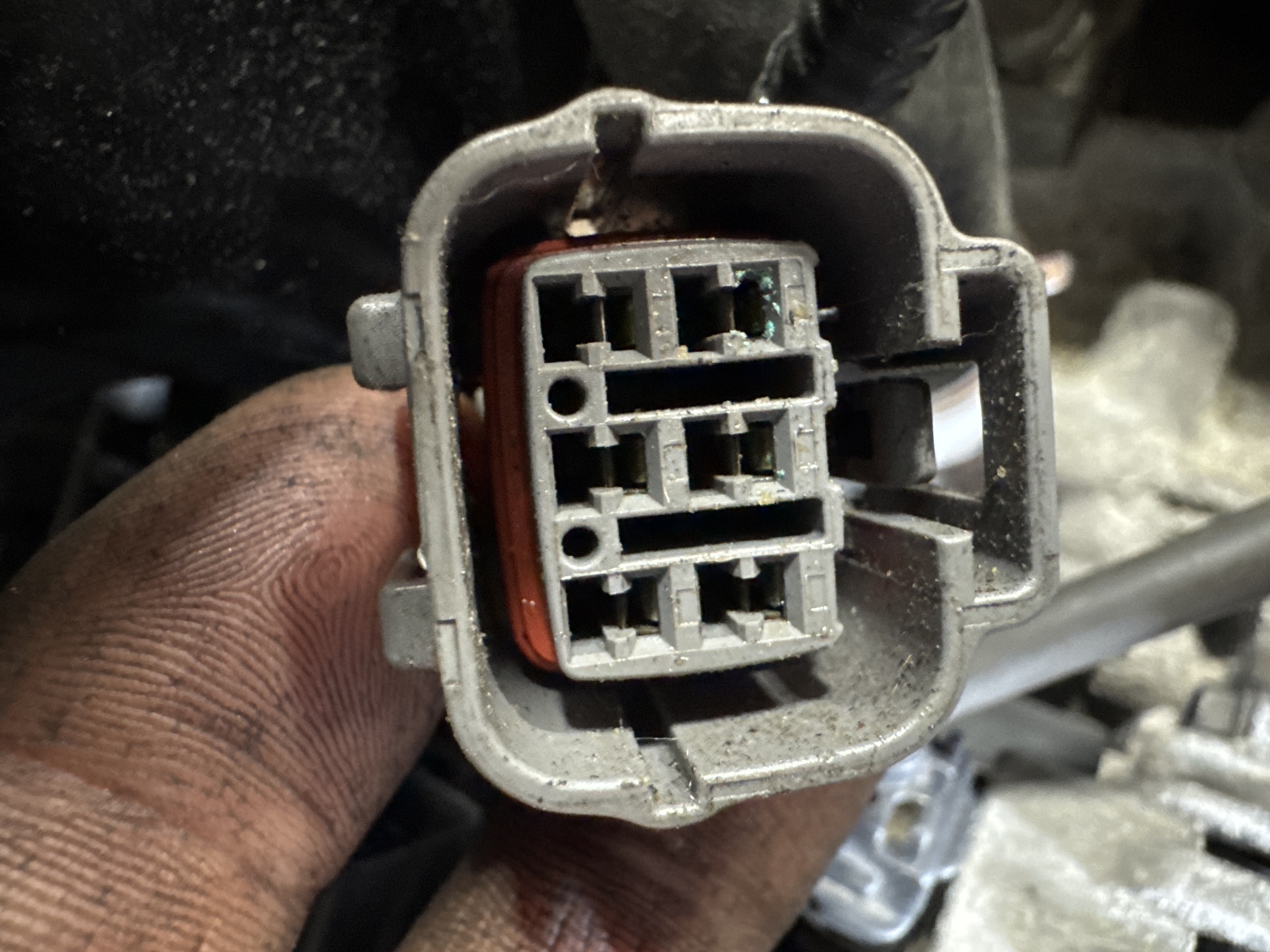
EGR flow error on a 2020 Subaru Forester solved in Granby, CT. Passages clean, valve OK—corroded harness pins caused high resistance. Precise diagnosis, smart repair.
This 2020 Subaru Forester rolled into our Granby, CT shop with an EGR flow error on the dash and a frustrated owner. On these newer Subarus, an EGR code often points to a cooler or valve packed with carbon. We see that a lot in Hartford County thanks to short trips, winter idling, and road salt—so our initial plan was to verify those usual suspects. But when we pulled the valve, cooler, and the intake-side passages for inspection, everything was surprisingly clean. The valve actuated smoothly on the bench, and the cooler wasn’t choked with soot. Still, the ECU kept flagging an EGR flow performance fault. That’s when the job got interesting.
Rather than throw parts at the problem, we went deeper. We commanded the EGR through the scan tool and watched live data. The expected change in engine vacuum wasn’t there—yet the valve was clearly being “told” to open. That pointed us toward the electrical side of the circuit. Under magnification, we found corrosion on the vehicle-side harness and at the EGR valve pins. The extra resistance in those terminals was dropping voltage under load, preventing the valve from opening as far and as fast as the computer expected. The ECU saw insufficient flow and set the error.
With the right testing, we confirmed the real failure and avoided needlessly replacing a good valve and cooler. When you’re diagnosing modern Subaru emissions systems, accurate testing is everything. That’s the difference between getting your Forester fixed right the first time and wasting time and money on guesswork.
What the driver noticed - Check Engine Light on - Occasional rough idle on cold start - Slight loss of power during steady cruise - Fuel economy a bit lower than normal
Typical EGR-related codes we see on late-model Subarus - P0400: EGR Flow - P0401: EGR Flow Insufficient - P0403: EGR Control Circuit - Manufacturer-specific EGR performance or circuit range codes
What these codes mean in plain terms The engine computer (ECU) uses sensors—including the MAP sensor and oxygen sensors—to infer how much exhaust gas is recirculating back into the intake under certain conditions. If the valve doesn’t open when commanded, or opens but actual flow doesn’t match what the ECU expects, you get an EGR flow error. Many times, the restriction is carbon buildup in the cooler, valve, or intake ports. Other times, especially on vehicles in New England, the failure is electrical: poor grounds, corroded terminals, or crushed wiring near the connector. The symptoms can be subtle—a light on and a slight stumble—or more pronounced if the valve sticks open or closed. Either way, the only honest path to a fix is a methodical diagnosis.
Our diagnostic approach on this 2020 Forester
1) Verify the complaint and pull freeze-frame data We connected our factory-level scan tool, documented the EGR code(s), and saved freeze-frame data to see the exact conditions when the code set: coolant temperature, engine load, RPM, vehicle speed, commanded EGR duty, and MAP sensor readings. Freeze-frame is key: it tells us when and how the computer became unhappy.
2) Baseline inspection and known-issue checks - Visual inspection of the EGR cooler, valve, and nearby harness - Check for coolant leaks at the cooler (which can cause corrosion over time) - Inspect intake tract for abnormal soot deposits - Verify PCV function and air-fuel trims (excessive deposits elsewhere can point to broader issues) Everything looked clean and intact. No oil or coolant residue in the EGR cooler, and no sludge hinting at a chronic carbon problem.
3) Functional testing of EGR flow With the engine warm and idling, we used bi-directional controls to command the EGR valve open in small steps. On a healthy system, opening the EGR at idle causes the engine to stumble slightly and the MAP kPa to rise, because the intake charge is diluted with exhaust. On this Forester, the change was minimal—yet not zero—suggesting the valve might be moving but not enough. That’s the kind of nuance that prevents a misdiagnosis.
4) Electrical testing under load Command and feedback don’t always match in the real world if the circuit can’t carry proper current. We used a lab scope and a low-amp probe to look at the valve’s current draw while commanding step changes. In parallel, we performed a voltage drop test on both the power feed and the ground side of the EGR circuit. Static resistance checks can look fine, but under load the story changes. We found excessive voltage drop at the connector—enough to limit pintle travel and slow response time. The ECU was asking for movement the valve couldn’t deliver at the reduced voltage, so actual flow lagged behind commanded.
5) Terminal and pin fitment inspection We disconnected the EGR valve and carefully inspected both sides of the connection under magnification. The vehicle harness pins showed green and white crust (copper oxidation and possible road-salt intrusion). We also performed a terminal tension check, using proper-size probes to confirm the female terminals would still grip the male pins tightly. Several were loose. Even if you clean visible corrosion, a loose terminal won’t carry current correctly and will cause intermittent failures.
6) Harness wiggle test and heat soak verification We monitored the lab scope while gently moving the harness and connector body. Current draw and commanded feedback fluctuated with movement—classic sign of a poor connection. After a heat soak (engine fully hot and bay heat radiating), the problem worsened, which lines up with metal expansion reducing already marginal terminal contact pressure.
7) Mechanical verification of the valve and flow path To rule out remaining mechanical variables, we bench-tested the EGR valve for smooth travel and verified the cooler and intake passages with a borescope and targeted cleaning. Everything remained clean and free-moving, reinforcing that the restriction was electrical, not carbon.
Diagnosis conclusion The root cause of the EGR flow error on this 2020 Forester was high resistance at the EGR connector terminals on the vehicle-side harness and beginning corrosion on the valve’s pins. Under load, the voltage drop limited current to the actuator, reducing pintle lift and response. The ECU saw insufficient EGR flow and set the code. Replacing the valve or cooler would not have corrected the underlying electrical issue.
The fix we performed
- De-pin and repair the harness connector: We carefully de-pinned the affected terminals on the vehicle-side connector. Corroded terminals were replaced with new OEM-spec terminals and seals rather than reused. We performed an overlay repair where necessary if wire strands showed black copper or wick-in corrosion.
- Clean and protect mating pins: The EGR valve’s male pins were cleaned using approved contact cleaner and non-abrasive tools to avoid plating damage. Pin straightness and plating integrity were verified. If a pin’s finish is compromised, we discuss valve replacement with the customer—but in this case, cleaning restored proper contact.
- Terminal tension and drag test: After installing the new terminals, we confirmed tight, consistent contact pressure using the correct gauge test probes. Proper terminal fitment matters as much as “shiny metal.”
- Harness strain relief: We added loom and strain relief where the harness flexes near the valve to reduce future movement and moisture intrusion. Routing was optimized to minimize water splash from the cowl and road spray.
- Corrosion prevention: We used the correct dielectric grease on the connector perimeter seals (not on the actual contact surfaces) to help keep out moisture. Electrical contact enhancer was applied sparingly to the metal interfaces where appropriate.
- Verification test drive: With repairs complete, we repeated the bi-directional EGR command test. MAP response matched expectations, idle reacted predictably, and the lab scope showed stable current draw with negligible voltage drop on both power and ground sides. We cleared codes and completed an OBD-II drive cycle around Granby, East Granby, and Simsbury to confirm the monitor ran and passed. No pending or stored EGR codes returned.
What we did not do We didn’t sell an EGR valve or cooler the car didn’t need. Parts were not the villain—corrosion at the connector was. By proving the cause, we protected our customer’s wallet and delivered a lasting repair.
Why this matters to Subaru owners in Hartford County
- Avoid the parts cannon: EGR valves and coolers on late-model Subarus aren’t cheap. Replacing them blindly can run up the bill without fixing the real fault. Proper testing isolates the cause—mechanical, electrical, or software-related—so you only pay for what’s broken.
- Electrical failures are common in New England: Road salt, moisture, and temperature swings cause terminals to oxidize and lose spring tension. A circuit can pass a quick resistance check, yet fail under load. That’s why we test live with current, voltage drop, and scan tool control—methods that reveal truth, not guesses.
- Emissions and drivability: EGR isn’t just about passing Connecticut emissions. It affects combustion temperature, engine knock control, and fuel economy. When flow is off, you can get a rough idle, sluggish response, and a persistent Check Engine Light.
- Long-term prevention: Keeping the engine clean helps minimize carbon buildup across the PCV and EGR systems. We recommend high-quality full synthetic 5W-30 and conservative 3,000-mile oil change intervals for these Subarus to control deposits and protect seals. Regular inspections of connectors and harness routing can also prevent moisture intrusion that leads to corrosion.
Serving our neighbors If you’re in Granby, East Granby, Simsbury, Avon, Canton, Suffield, Windsor Locks, Bloomfield, or even over the line in Southwick, MA, and your Subaru has an EGR flow code, we’re here to help. At College Highway Auto, we diagnose first, repair second, and never guess with your money.
Not necessarily. On many Subarus, the root cause can be carbon in the cooler or intake passages, but we also find electrical issues like corroded connectors or weak grounds. We confirm the actual fault with live data, voltage drop testing, and functional checks before recommending any part.
Common signs include a Check Engine Light, roughness at idle when warm, slight hesitation during cruise, and sometimes reduced fuel economy. Severe faults (like a valve stuck open) can cause stalling or very rough running. A proper diagnosis will pinpoint whether the issue is flow-related, control-related, or both.
Short-term driving is usually possible, but we don’t recommend delaying diagnosis. An EGR problem can increase combustion temperatures, affect knock control, and harm fuel economy. It may also prevent your readiness monitors from setting, which can cause an emissions test failure in Connecticut.
We use a factory-level scan tool to command the valve and watch MAP/airflow response, check fuel trims, and log freeze-frame data. We scope the actuator’s current draw and measure voltage drop on the power and ground sides under load. We also inspect and, if necessary, borescope the cooler and intake passages. This step-by-step approach isolates whether the fault is mechanical restriction, actuator failure, or electrical resistance in the circuit.
Corrosion at the connector or in the wiring increases resistance. Under load, that resistance causes a voltage drop, so the actuator doesn’t receive full power. The valve may move, but not enough or not fast enough. The engine computer sees less EGR flow than commanded and sets a performance code.
We only replace parts that fail testing. If the valve and cooler pass mechanical checks and the electrical fault is in the harness or connector, we repair the affected terminals, wiring, and seals. If a valve’s pins are damaged or its internal actuator fails, we’ll quote replacement with OEM-quality parts.
Most EGR diagnostics take 1–2 hours. Repairs vary: a connector and terminal repair may be completed the same day; heavy carbon cleaning or cooler replacement takes longer. We’ll provide an estimate after initial testing so you know the plan and timeline.
Regular service with high-quality full synthetic 5W-30 and conservative 3,000-mile oil changes helps control deposits that contribute to EGR and PCV buildup. Avoid extended idling and complete occasional longer drives so the engine reaches full temperature. During service, we inspect vulnerable connectors and add strain relief or sealing where appropriate.
Our goal is a durable fix proven by data. After repairs, we clear codes, complete an OBD-II drive cycle, verify the EGR monitor runs and passes, and ensure no pending or stored codes return. As with any vehicle, long-term success also depends on ongoing maintenance and avoiding moisture intrusion.
Absolutely. We serve Granby and nearby towns across Hartford County and the CT–MA line, including Simsbury, East Granby, Avon, Canton, Windsor Locks, Bloomfield, and Southwick, MA. Give us a call and we’ll get you scheduled.