Misfire codes, rough idle, no power? Low compression could be the cause. Granby CT’s College Highway Auto explains diagnosis, repair options, and when to rebuild or replace.
“Is this engine worth fixing?” We hear that a lot when a vehicle rolls in with misfire codes, a rough idle, and no power. In your case, one cylinder’s compression reads notably low—lower than it should be for healthy combustion. That’s a major clue, but it is not the whole story. Before anyone talks repairs or replacement, we need to pinpoint why the compression is low and how far the damage goes.
At College Highway Auto in Granby, CT, we approach low-compression complaints with a calm, methodical plan. Many issues that feel catastrophic can be confirmed (or ruled out) with the right tests. A burned valve, a head-gasket breach, timing wear, a collapsed lifter, a stuck injector that washed down a cylinder, or worn rings all produce similar symptoms—but each requires a different fix and a different budget. Guessing leads to wasted money. Testing leads to the right decision.
This page walks you through what low compression means, how we diagnose it, and the honest options: repair, rebuild, replace, or retire. We also weigh important local factors—like Connecticut emissions requirements, parts availability, and what makes sense for drivers around Granby, East Granby, Simsbury, Southwick, Suffield, Windsor Locks, and the rest of Hartford County.
If you’re staring at a shaky idle, flashing check engine light, and no power up a Granby hill, you’re not alone. Let’s talk symptoms, what they mean, and how we decide whether this engine is worth fixing.
Common signs tied to low compression and misfires include:
- Check Engine Light with misfire codes: P0300 (random) or P0301–P0308 (specific cylinders). If it flashes, the catalytic converter is at risk. - Rough idle or engine shake: The vehicle may feel like it’s “loping” or about to stall at stoplights. - No power under load: Going up hills on Route 10 or merging onto Route 20 feels sluggish or impossible. - Hard starts or extended cranking: Low compression can make cold starts difficult. - Fuel smell from the exhaust: Raw fuel from a misfiring cylinder can overwhelm the catalyst. - Popping through the intake or exhaust: Combustion events happening at the wrong time can hint at valve or timing issues. - Excess smoke: Blue smoke suggests oil consumption (rings or valve guides); white steam could mean coolant (head gasket or crack); black smoke points to over-fueling. - Overheating or coolant loss: May point toward head gasket sealing trouble. - New noises: Ticking, tapping, or rattling can correspond to valvetrain or timing components.
What does a single low cylinder usually mean? Often: - Burned or leaking valve (common on high-mile engines or those run hot) - Head gasket leak between the cylinder and a coolant or oil passage - Stuck piston rings or ring wear (sometimes from extended oil intervals, injector wash, or overheating) - Timing issue (stretched timing chain, jumped belt, worn cam phaser) causing valves to be open when they shouldn’t be - Collapsed lifter or wiped cam lobe not allowing a valve to open or close properly - Cracked piston or cylinder wall damage (less common, but possible after detonation or severe overheating)
Each of these has a different repair path. That’s why we never recommend parts until tests confirm the cause.
Our diagnostic process is designed to confirm the low compression finding and isolate the exact reason. Here’s how we build a trustworthy answer—and a plan that fits your budget and goals.
1) Scan and data review - Code scan: We document all DTCs and freeze-frame conditions when the misfire occurred. We check misfire counters to see which cylinders and at what RPM/load. - Fuel trims and sensor data: Rich or lean mixture trends tell us whether fueling or air leaks are contributing. - Mode $06 (where applicable): Helps identify marginal misfires not yet setting hard codes.
2) Relative compression test - Using a lab scope or enhanced scan tool, we perform a non-invasive relative compression test during cranking. This quickly flags any cylinder contributing less than the others. It’s a fast way to verify the complaint before diving in.
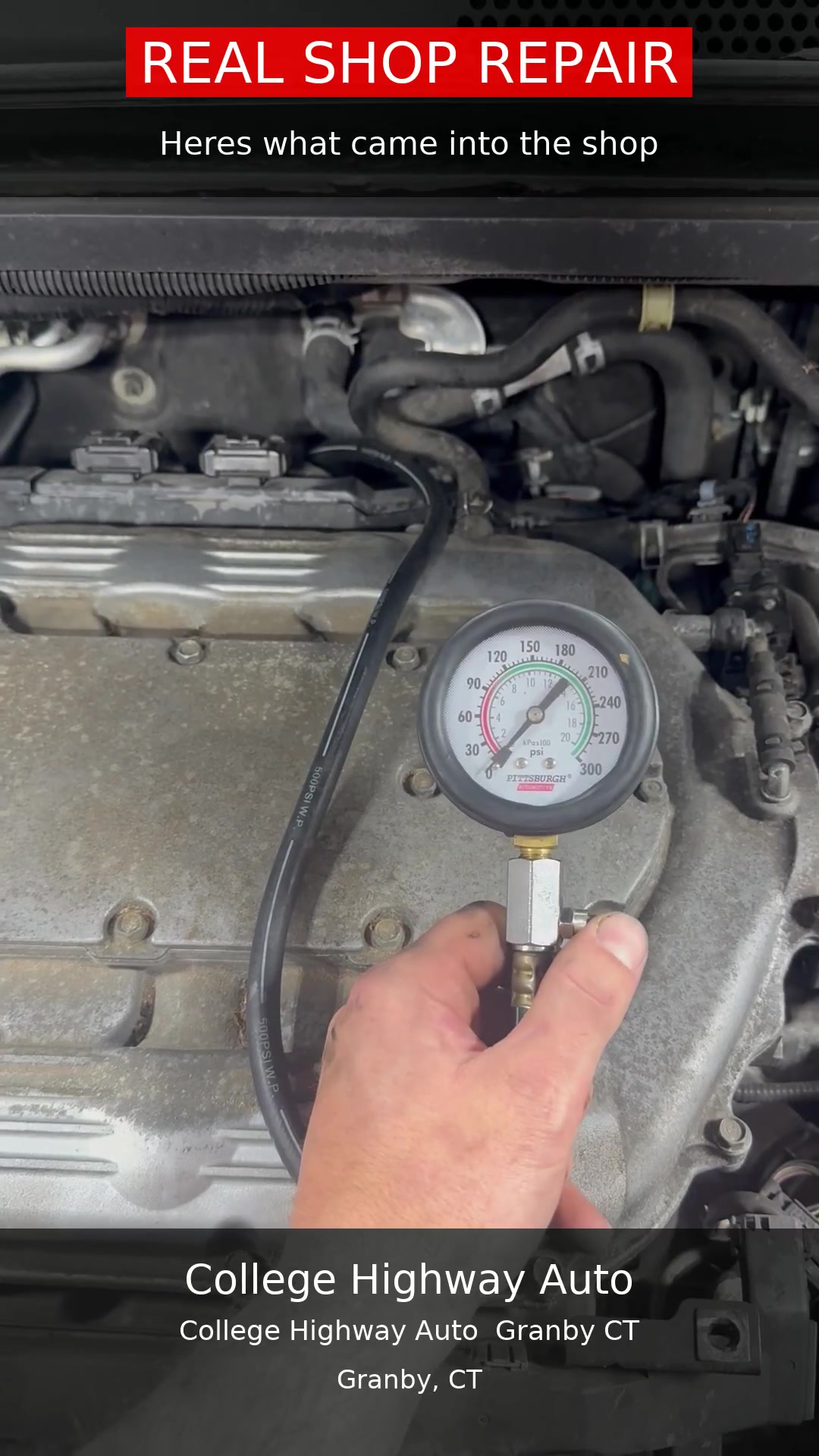
3) Mechanical compression test - We remove spark plugs and test each cylinder. Numbers matter, but so does consistency. A single cylinder significantly lower than its neighbors is the red flag you’ve noticed. - Dry vs. wet test: If a small amount of oil added to the cylinder raises compression, rings may be worn or stuck. If it doesn’t improve, valves, head gasket, or timing likely top the list.
4) Cylinder leak-down test - This is the gold standard. We lock the cylinder at top dead center on the compression stroke and pressurize it. - We measure percentage leak and listen/observe where air escapes: • Intake hissing = intake valve leak • Tailpipe hissing = exhaust valve leak • Oil fill/breather noise = rings or piston issue • Bubbles in radiator = head gasket or a crack into a coolant passage
5) Borescope inspection - A camera down the spark plug hole shows the story: valve edges, piston tops, crosshatch on cylinder walls, oil wash, coolant traces, or physical damage. A burned valve often has a visible chunk missing or a white, feathered edge. Coolant steam-cleaning can leave abnormal clean patches.
6) Valve timing verification - We compare cam and crank correlation with a scope or physical timing marks. Stretched chains, jumped teeth, or stuck cam phasers can cause low cylinder contribution without any hard parts being broken—yet.
7) Intake and vacuum leak checks - A smoke test confirms whether unmetered air is diluting the mixture, especially on engines with plastic intakes or known PCV/EGR issues. A stuck-open PCV can look like a lean misfire at idle.
8) Fuel system assessment - Injector balance or current ramp testing helps identify a dead, stuck, or leaking injector. A stuck-open injector can wash cylinder walls, killing compression until the oil film returns—or causing ring damage over time.
9) Ignition system inspection - We evaluate coil output, plug condition/gap, and secondary patterns. A weak spark will not cause low compression, but it can compound the misfire and damage the catalytic converter.
10) Exhaust backpressure test - A clogged catalytic converter can reduce power and exaggerate misfire symptoms. If the misfire has been present for a while, we make sure the cat hasn’t melted down.
11) Cooling system and fluid checks - Pressure test, chemical block test (when appropriate), and oil/coolant cross-contamination inspection help confirm or rule out head gasket sealing problems.
12) Maintenance and oil history review - Long oil intervals, varnish, and sludge can collapse lifters, stick rings, and starve timing components. In our region, short-trip driving in Granby winters is hard on oil. We generally recommend quality full synthetic 5W-30 and 3,000-mile intervals to keep internals clean and responsive, especially on direct-injected engines.
The outcome of these steps is a written diagnosis with photos and test results. We’ll show you exactly why the cylinder is low and outline options: targeted top-end repair, timing service, bottom-end rebuild, replacement engine, or retirement—along with honest cost and time estimates.
We never sell repairs that testing doesn’t support. Once we know why the cylinder is low, we tailor the path forward to your vehicle’s condition, mileage, and your plans for it.
Common scenarios and solutions
1) Burned or leaking valve - Repair: Cylinder head removal, machine shop valve job, replace valve(s)/guides/seals as needed, resurface the head, new head gasket set, head bolts or studs, fluids, and reassembly to factory torque/angle specs. - Notes: We inspect the companion cylinder head if mileage is high. We also address root causes like overheating or tight valves.
2) Head gasket failure - Repair: Remove the affected head(s), pressure test and resurface, install OE-quality gasket set, renew head fasteners, flush cooling system, fresh oil/filter, and verified torque sequences. - Notes: If overheating caused warpage, we confirm block deck condition before reassembly.
3) Stuck or worn rings / cylinder wear - Options: • Top-end only is not enough. For ring or cylinder issues, we discuss short block/long block replacement or a full rebuild. • A quality remanufactured long block with updated parts often carries the best warranty and long-term value. • A used engine can be cost-effective but is only as good as its history; we provide compression/leak-down when possible and still replace critical gaskets, timing components, and seals before install. - Notes: If an injector washed down the cylinder, we replace the injector and change oil to protect bearings.
4) Timing chain/belt issues or cam phaser faults - Repair: Timing chain kit or belt service (guides, tensioners, sprockets as needed), cam phasers/actuators if failed, cam/crank seals, and re-time to spec. - Notes: We verify oil supply and control solenoids for variable valve timing. Clean oil is essential—sludge can starve phasers and tensioners.
5) Collapsed lifter or wiped cam lobe - Repair: Replace the affected lifter(s) and camshaft, inspect/replace any damaged followers/rockers, flush oil passages, and reset lash or preload to spec. - Notes: We carefully clean or replace oil control components and recommend a strict oil service cadence moving forward.
6) Cracked piston or severe cylinder damage - Repair: Engine replacement or rebuild only. We’ll price a quality reman, a vetted low-mile used unit, or an in-house rebuild if appropriate for the platform.
Supporting repairs and rechecks - Spark plugs, coils, and injectors: If a cylinder was compromised, we inspect and replace any components that contributed to or were damaged by the misfire. - Induction cleaning for DI engines: Walnut blasting intake valves and addressing PCV updates can prevent future misfires from carbon buildup. - Catalytic converter health: Prolonged misfires can overheat the cat. We test and advise accordingly. - Fluids and break-in: After major work, we use quality full synthetic 5W-30 and set you up on 3,000-mile intervals for a while to flush debris and verify stability.
Cost and decision-making - Top-end repairs (single head, valve work) can be far less than a full engine. Timing service costs vary by engine design. - Engine replacement costs depend on availability, warranty, and whether we’re installing a reman, used, or new long block. - We’ll line-item everything. You’ll see where your dollars go—machine work, parts, fluids, gaskets, and testing. No guesswork.
Warranty and expectations - We stand behind our work with clear parts and labor warranties appropriate to the repair and components used. - Our goal is a reliable, emissions-compliant vehicle that feels right to drive in Granby and passes Connecticut testing without drama.
When is it not worth fixing? - If structural rust, transmission problems, or multiple major systems are also failing, or the cost approaches or exceeds the vehicle’s value, you may choose to retire the car. We’ll help you weigh that call without pressure.
Bottom line: With accurate testing, you’ll know whether a targeted repair restores compression, or a replacement engine offers better value. Either way, you’ll have a plan you can trust.
Driving long with a low-compression misfire is risky and expensive. Raw fuel from a dead cylinder can overheat and melt the catalytic converter—turning a repairable engine issue into a multi-thousand-dollar emissions repair. Fuel economy plummets, oil can thin out with fuel, and bearings suffer. If coolant is entering the cylinder, you can hydro-lock the engine or pit the cylinder walls. If timing is off, valves can meet pistons with catastrophic results.
Safety matters, too. A car that can’t climb a Hartford County hill or merge cleanly is a liability in traffic. In winter, an engine that barely idles at a stoplight leaves you without heat or defrost when you need it most.
Upfront diagnostics and a precise repair protect your investment, the environment, and your time. Whether you’re commuting to Hartford, running errands in Granby, or heading to Simsbury for the weekend, a smooth, properly sealed engine makes every mile better.
It means that cylinder cannot seal pressure during the compression stroke. Common causes include a leaking valve, head gasket breach, worn or stuck piston rings, timing issues that hold a valve open, a collapsed lifter, or physical damage like a cracked piston. The exact cause determines the right repair.
We combine a mechanical compression test with a cylinder leak-down test and a borescope inspection. Where the air escapes during leak-down—intake, exhaust, crankcase, or cooling system—identifies the failed component. We also verify cam/crank timing correlation and check for coolant or oil cross-contamination to rule in or out a head gasket.
Not recommended. Raw fuel from a misfiring cylinder can overheat and melt the catalytic converter, dilute engine oil, and escalate minor mechanical issues into major ones. If the Check Engine Light is flashing or the car has severe power loss, have it towed to prevent further damage.
Options depend on the cause: a valve job or head gasket repair is often a top-end service; timing issues may require a chain or belt kit with guides and tensioners; ring or cylinder wear typically means a rebuild or replacement engine. Costs vary widely by make and model. After testing, we provide a written, line-item estimate so you can compare targeted repair versus engine replacement.
Each has pros and cons. A remanufactured long block typically offers the best warranty and long-term value. A used engine can save money but is only as good as its history; we still replace key gaskets and timing components when installing. A local rebuild can be viable for certain platforms. We’ll price out all three and explain warranties, downtime, and reliability so you can choose confidently.
Indirectly. A stuck-open injector can wash oil from the cylinder walls, reducing compression temporarily and accelerating ring and cylinder wear over time. If testing shows a fueling issue, we correct it and change the oil to protect bearings, then recheck compression after repairs.
Most vehicles can be accurately diagnosed within a workday once in the bay. Complex cases that require extended testing, specialized tooling, or machine shop consultation can take longer. We keep you posted with photos, videos, and test results as we go.
Not always. If the misfire was recent and we address it quickly, the converter may be fine. Long-term misfires can overheat and melt the catalyst. We check backpressure and catalyst efficiency after the engine is running correctly and advise based on data.
We generally recommend full synthetic 5W-30 and 3,000-mile oil change intervals, especially for direct-injected engines and vehicles that see short trips in Granby winters. Clean oil supports variable valve timing components, lifters, and rings, helping prevent a repeat failure.
Yes. We routinely help drivers from East Granby, Simsbury, Suffield, Southwick (MA), Windsor Locks, Avon, Canton, Bloomfield, and greater Hartford County. If you’re unsure whether to drive or tow, call us—we’ll advise based on your symptoms.