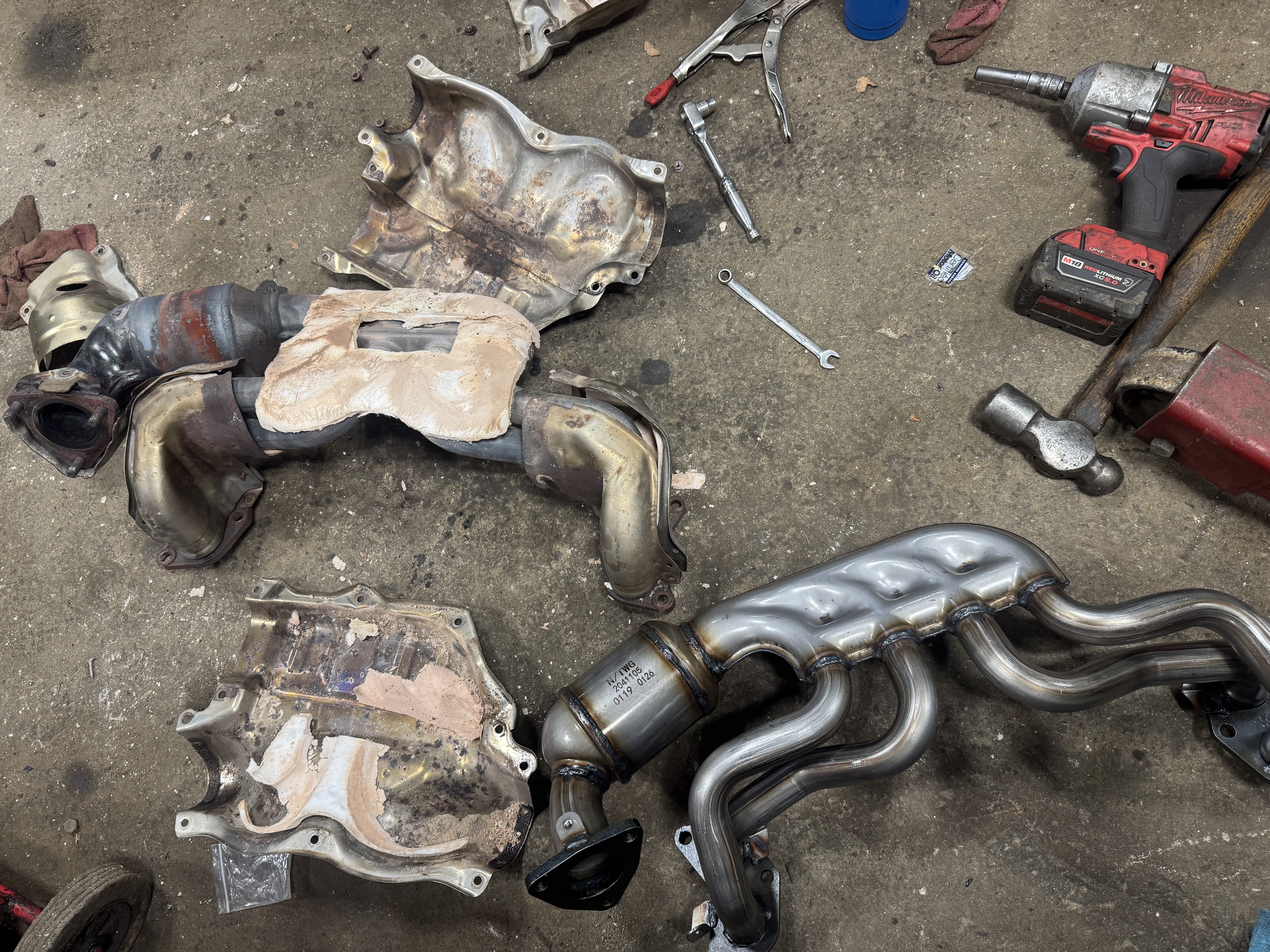
P0420 on your Subaru? We diagnose before replacing. Expert catalytic converter and O2 sensor testing in Granby, CT serving Hartford County and nearby towns.
P0420 on a Subaru can feel like déjà vu—especially if the light keeps coming back. As Subaru specialists in Granby, CT, we see this code every week on higher-mileage cars. Many of those engines use a bit of oil between changes, and over time that oil ash can poison the catalytic converter. But here’s the truth: a P0420 does not automatically mean the catalytic converter is bad.
We’ve fixed plenty of Subarus with P0420 by finding an exhaust leak ahead of the cat, replacing a lazy oxygen sensor, correcting a fueling issue, or addressing an engine that isn’t burning clean. Replacing parts on guesswork is the most expensive path. A proper diagnostic plan is the only way to protect your wallet and stop the light from coming back.
At College Highway Auto, we combine Subaru-specific experience with the right test gear to confirm the real cause before recommending a repair. Whether you’re in Granby, East Granby, Simsbury, Suffield, Windsor Locks, or anywhere in Hartford County, we’ll help you pass emissions, restore performance, and keep your Subaru healthy.
What you might notice with a P0420 on a Subaru:
- Check Engine light on, often with no obvious drivability symptoms - Slight loss of power on hills or at highway speeds - Rattling from under the car (a failing converter substrate) - Sulfur or “rotten egg” smell from the exhaust - Decreased fuel economy - Emissions readiness monitor won’t set, or failed emissions test - Companion codes like P2096/P2097 (post-cat fuel trim), misfire codes, or fuel trim codes
Some Subarus present no drivability complaints at all—just the light. Others have subtle misfires or consume oil between changes. Those small issues matter because they’re often what ruins a good catalytic converter over time.
Before any part gets ordered, we verify the fault. Our diagnostic approach on Subaru P0420 includes:
1) Confirm the code and capture data - Scan the ECM for P0420 and any companion codes (misfire, fuel trim, O2 sensor, EVAP). Freeze-frame data tells us what the engine was doing when the code set. - Check Mode $06 data for the catalyst monitor where supported; this can reveal marginal converter performance before it fully fails.
2) Inspect for exhaust leaks - Even a pinhole leak upstream of the rear O2 sensor can trick the ECM into thinking the converter is weak. We perform a smoke test and a careful visual of gaskets, flanges, and the manifold/header connections.
3) Evaluate fuel trims and misfires - We look at short- and long-term fuel trims at idle and cruise. Excessive positive trims can indicate vacuum leaks or unmetered air; negative trims can suggest a rich condition. Either one hurts the catalyst. - Misfire counters and live misfire data are checked. An intermittent misfire can overheat and melt the cat, or under-fuel it and make it ineffective.
4) Oxygen sensor behavior tests - On Subarus, the front sensor (A/F ratio sensor) should switch quickly and track mixture changes; the rear sensor should be relatively steady when the cat is working. If the rear sensor mimics the front closely, the catalyst may truly be weak. - We induce controlled rich/lean conditions and watch both sensors for appropriate response. A slow or biased rear O2 can falsely set P0420. We verify sensor health before condemning the cat.
5) Mechanical and combustion health - Compression or relative compression tests are performed if misfire or power complaints exist. Burned valves, tired rings, or timing issues can destroy a replacement cat quickly. - On higher-mileage Subarus, we check PCV operation and look for signs of oil consumption. Oil ash coats the catalyst washcoat and reduces efficiency.
6) Temperature and backpressure checks - Using an IR thermometer or temperature probes, we measure inlet/outlet catalyst temperature under load. A healthy converter typically runs hotter on the outlet side as it performs its chemical reactions. - If performance complaints exist, we perform an exhaust backpressure test to identify a partially clogged cat that may not yet set flow-related codes.
7) Software and service history - We review TSBs and calibration updates that may affect catalyst monitoring or fuel control strategies on specific Subaru models. - We consider fuel quality and maintenance history. Extended oil change intervals and poor-quality fuel often correlate with repeat P0420s.
Only after these checks do we decide whether the converter is truly at fault, or whether we’re looking at an exhaust leak, a sensor issue, or an engine-management problem. The goal is to fix the root cause so you don’t buy the same repair twice.
When testing confirms the catalytic converter has failed, we replace it the right way and address anything that damaged it in the first place.
What our catalytic converter service includes: - Quality, direct-fit parts: We install OE or premium aftermarket converters that meet or exceed specifications. Connecticut follows CARB standards; we source CARB-compliant converters when required for your Subaru and model year. - New hardware and sealing surfaces: Rusted flange bolts and crushed gaskets cause leaks and repeat codes. We replace gaskets, studs/bolts, and clean mating surfaces to prevent false readings and noise. - Sensor strategy based on test results: We do not throw O2 sensors at the car “just because.” If testing shows a lazy or biased front A/F sensor or rear O2, we’ll recommend replacement at the same time so the new cat isn’t judged by a faulty sensor. - Fixing what killed the old cat: This is key. If we found misfires, vacuum leaks, fueling errors, or oil consumption concerns, we address them first. Examples: - Tune-related issues: coils, plugs, injector balance, intake leaks, or MAF contamination - Oil consumption management: PCV service, verifying correct oil grade, and discussing repair options if consumption is excessive - Exhaust leaks upstream of the cat: repaired before or during cat installation - Software updates where appropriate - Post-repair validation: We road test through a Subaru-friendly drive cycle, verify catalyst efficiency and O2 behavior, and confirm readiness monitors for Connecticut emissions.
Timeline and expectations: - Many catalytic converter replacements can be completed the same day once the root cause is fixed, but rusted hardware or parts availability can extend the timeline. We’ll communicate clearly and won’t promise a result we can’t verify with data.
Protecting your new converter: - Use Top Tier gasoline, fix misfires immediately, and keep oil changes short. We generally recommend full synthetic 5W-30 and 3,000-mile intervals on these engines to keep the rings and PCV system cleaner. Longer intervals tend to increase oil consumption and ash buildup—both are catalyst killers.
What about universal cats? - We avoid weld-in universal converters on late-model Subarus. They often fail the monitor or don’t last under New England driving conditions. Direct-fit, CARB-compliant units paired with good diagnosis save money over the long run.
Our goal is simple: verify the diagnosis, repair confidently, and keep your Subaru’s Check Engine light off for the right reasons.
A P0420 isn’t just a light—it’s your Subaru telling you the exhaust cleanup system may not be working. Ignoring it can lead to:
- Failed Connecticut emissions inspections and registration headaches - Reduced fuel economy and drivability - Overheating and potential meltdown of the converter, which can cause exhaust restriction and engine damage - A repeat failure if the root cause (misfire, oil consumption, exhaust leak) isn’t corrected
Catalytic converters are expensive, and replacing one without a plan is riskier still. Careful testing protects your wallet and keeps our air clean in Granby, Hartford County, and beyond.
P0420 indicates the ECM thinks the catalytic converter’s efficiency is below the threshold it expects. It compares the front A/F sensor to the rear O2 sensor; if they look too similar over time, it flags the cat as weak. That can be a truly failing converter, a rear sensor issue, an exhaust leak, or an engine that isn’t running clean.
Yes. A slow or biased rear O2 sensor can mimic a weak converter and set P0420. We verify sensor response by inducing rich and lean conditions and watching how the sensor reacts. If it fails testing, we replace it; if it passes, we keep looking for the real cause.
If the car drives normally and no other codes are present, short trips are usually safe. However, you may fail emissions, fuel economy can drop, and underlying issues (misfire or rich running) can overheat and damage the converter. It’s best to have it diagnosed soon.
We confirm with multiple tests: sensor behavior analysis, Mode $06 data where available, exhaust leak checks, induced rich/lean response tests, temperature differential across the converter, and, when needed, backpressure testing. We also rule out misfires, fueling problems, and oil consumption before condemning the cat.
Top culprits include long-term oil consumption (ash poisons the catalyst), misfires, rich or lean fuel conditions, and exhaust leaks upstream of the rear O2 sensor. High mileage, extended oil change intervals, and poor fuel quality accelerate wear. We address these root causes to protect your new converter.
Only if testing shows they’re slow, biased, or contaminated, or if damage is evident. We don’t replace sensors on guesswork. Accurate sensors are important because they judge your new converter’s performance.
We typically avoid universal weld-in converters on late-model Subarus. They often fail the catalyst monitor or don’t last in New England conditions. We recommend direct-fit, CARB-compliant converters where required in Connecticut for reliable performance and monitor readiness.
Costs vary widely by model, engine, and whether your Subaru uses a single or multiple converters. Pricing also depends on CARB-compliant requirements, hardware condition, and any sensor or root-cause repairs needed. After diagnosis, we provide an itemized estimate before work begins.
Once parts arrive, many jobs are completed the same day. Rusted hardware, seized studs, or additional repairs can extend the timeline. We’ll keep you updated and verify monitors are ready after the road test so you’re set for Connecticut emissions.
Fix misfires immediately, keep the PCV system healthy, use Top Tier fuel, and avoid long idling. Most importantly, keep oil changes short—on these engines we recommend full synthetic 5W-30 every 3,000 miles. Lower oil consumption means a cleaner, longer-lasting catalyst.