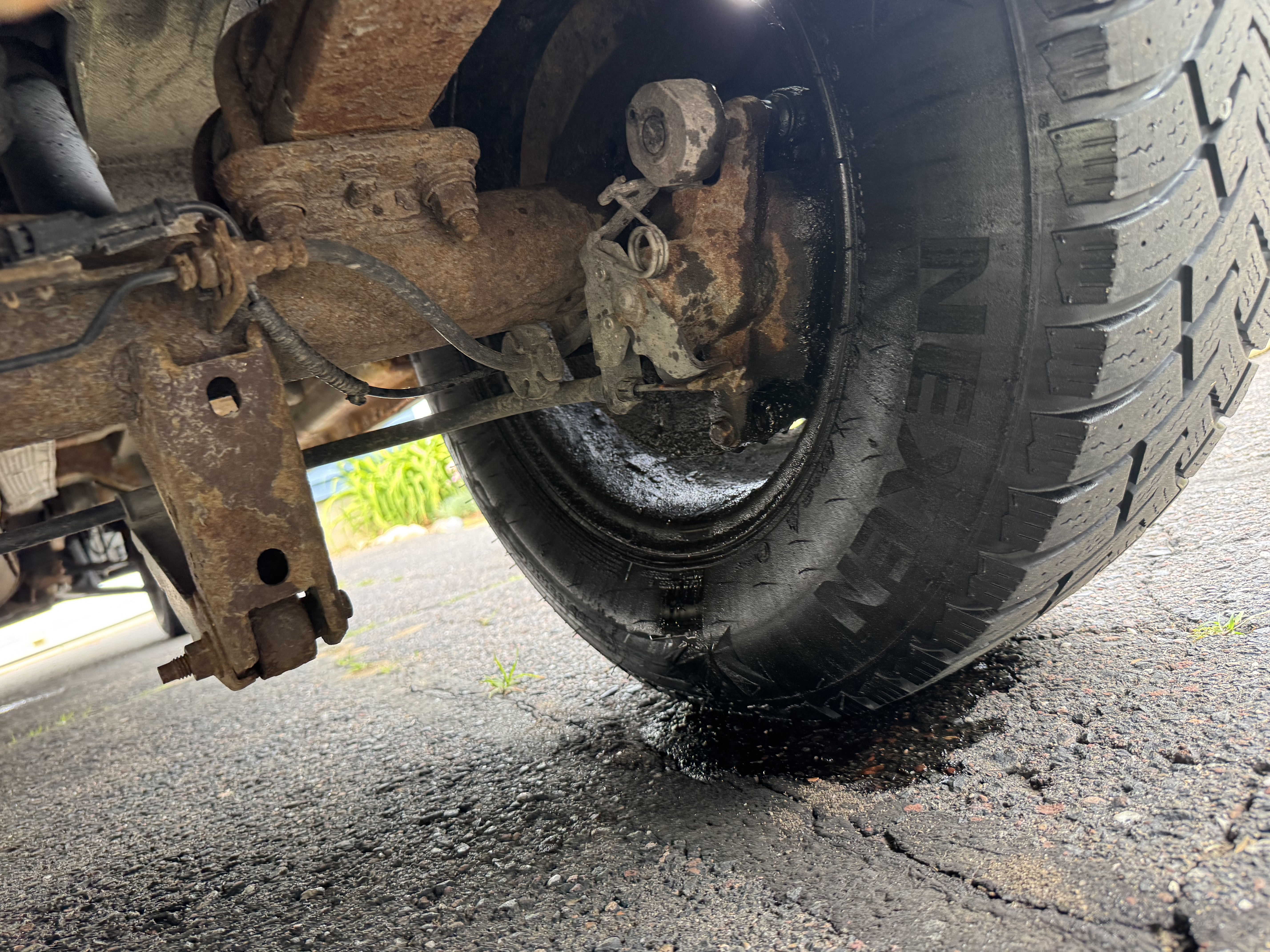
Experiencing a rear axle seal leak? Learn from our Granby CT shop how to diagnose, repair, and prevent rear axle seal leaks with expert insights and local knowledge.
At College Highway Auto in Granby, CT, we often encounter rear axle seal leaks during routine maintenance and vehicle inspections. Rear axle seals are critical components that prevent differential fluid from leaking out, ensuring proper lubrication of the gears inside the axle housing. When these seals fail, they can lead to fluid loss, poor axle lubrication, and ultimately, costly damage to the differential assembly. Surprisingly, even with a significant leak, there may still be differential fluid left inside, as we found in a recent repair case. This guide provides a thorough look into the symptoms, diagnosis, and repair process of rear axle seal leaks, specifically tailored to the driving conditions and vehicles we service in Hartford County and the surrounding areas like Simsbury, East Granby, Suffield, and Windsor Locks. Understanding these repairs can help you make informed decisions about vehicle maintenance and prevent more expensive repairs down the line.
Rear axle seal leaks often present subtle but telltale signs that alert vehicle owners and technicians to the problem before it becomes a catastrophic failure. One of the primary symptoms is the presence of fluid spots or puddles where the vehicle is regularly parked. At College Highway Auto, we've observed that the fluid typically has a distinctive gear oil smell and a slick texture, which differentiates it from engine oil or transmission fluid leaks. While the leaking fluid from a rear axle seal can appear minor at first, it can lead to gradual fluid loss which compromises the lubrication inside the differential. Some drivers may hear unusual noises such as humming, whining, or clunking coming from the rear of the vehicle during acceleration, deceleration, or when turning. These sounds often indicate worn or damaged gears resulting from insufficient lubrication caused by a leaking seal. Additionally, some owners report a change in handling or a vibrating sensation from the rear axle area, which may hint at fluid contamination or internal damage. In our experience with vehicles from towns like Simsbury and Suffield, these symptoms can be intermittent and easily mistaken for tire or brake issues, making proper diagnosis by an experienced technician crucial. Notably, even if the rear axle seal leak seems severe, as in the case we recently serviced, there can still be an adequate amount of differential fluid remaining, which buys some time to plan repairs without risking immediate failure. However, ignoring these symptoms can lead to a total differential rebuild or costly axle damage, underscoring the importance of early detection and repair.
Diagnosing a rear axle seal leak involves a systematic approach to confirm the source of the leak and assess the extent of fluid loss. At College Highway Auto, serving Granby CT and the neighboring Hartford County communities, our technicians follow these detailed steps to ensure accurate diagnosis: 1. Vehicle History and Visual Inspection: We begin with a thorough customer interview to understand any recent symptoms, fluid top-ups, or unusual noises. Then, we conduct a visual inspection of the rear axle area including hubs, brake components, and the differential housing to look for fresh fluid signs. 2. Identifying Fluid Type: To distinguish the fluid, we use our knowledge to differentiate gear oil, which is heavier and darker with a unique smell, from brake or transmission fluid. This is critical to ruling out other leaks. 3. Cleaning and Dye Test: The rear axle area is cleaned to remove residual fluid. We may add a UV dye specifically designed for gear oil systems to the differential, then run the vehicle to trace the leak precisely under UV light. 4. Checking Fluid Levels: We access the differential fill plug to check fluid levels and condition. Surprisingly, as in a recent Granby case, the fluid level may still be adequate despite heavy leaking. This helps determine urgency. 5. Inspecting Axle Shafts and Seals: With the wheels off, the axle shafts are rotated and inspected for wear or damage. We carefully examine the axle seals for cracks, deformation, or hardening that could cause leaks. 6. Checking Bearing Play and Shaft Movement: Excessive axle or bearing movement can cause or exacerbate seal leaks. We test these using specialized tools to ensure they are within manufacturer specifications. 7. Road Test: Under controlled conditions in the Granby area, we test drive the vehicle to listen for differential noises or detect vibration that might indicate internal damage due to fluid loss. 8. Additional Component Inspection: We verify that related parts such as axle nuts, seals on the pinion flange, and breather valves are functioning correctly since failure here can affect seal integrity. 9. Cross-Referencing Symptoms: Using all gathered data, we correlate symptom reports with physical evidence to confirm that the rear axle seal is the leak source and not another component. This thorough diagnosis allows us to recommend precise repairs and replacement part needs, ensuring repairs are both cost-effective and lasting. Our expertise gained from serving local communities like East Granby and Windsor Locks enables us to tackle seal leaks influenced by local road salt, climate, and driving habits.
Repairing a rear axle seal leak at College Highway Auto involves detailed service steps performed by our experienced mechanics using top-quality parts and equipment. For Granby CT and neighboring towns, our process is designed to guarantee long-term results and restore vehicle reliability. 1. Preparing the Vehicle: We raise and secure the vehicle on the lift, remove the rear wheels, and clean the axle housing area thoroughly to prevent contamination during disassembly. 2. Draining Differential Fluid: We remove the differential drain plug to safely drain all fluid and inspect it for metal shavings or contamination, helping assess internal wear. 3. Removing Axle Shafts: Depending on the vehicle make and model, we detach the brake assembly and carefully slide the axle shafts out of the housing, taking care not to damage any components. 4. Extracting the Old Seal: Using specialized seal pullers and tools, we remove the damaged rear axle seal, avoiding damage to the axle housing or shaft surface, which must remain smooth for proper seal seating. 5. Inspecting and Cleaning Components: We closely examine the axle bearings and shaft surface for wear or damage and inspect the seal bore for corrosion or scoring. Any issues can require additional repair or replacement. 6. Installing New Seal: We heat or lubricate the new OEM-quality rear axle seal as recommended, then press it into place evenly with precision tools to ensure proper seating and sealing properties. 7. Reassembling Axle Shafts: The axle shafts are reinstalled carefully, realigning any components and torquing axle nuts to factory specifications to prevent future leaks. 8. Refilling Differential Fluid: We refill the differential with manufacturer-recommended gear oil grade and quantity, often full synthetic 75W-90 or similar, suitable for Hartford County conditions, which optimizes seal hydration and longevity. 9. Final Inspection and Testing: After reinstallation, we test for leaks by running the vehicle and inspecting the axle under stress conditions. We conduct a final road test in and around Granby to confirm no noises or leaks remain. Our technicians document all steps and fluid details for customer transparency. 10. Customer Education and Follow-Up: We educate owners on the importance of regular differential maintenance, watching for symptoms, and the recommended fluid change intervals to minimize future seal issues. With decades of combined experience and a focus on quality service tailored to local driving environments, our shop ensures that rear axle seal repairs performed here provide dependable performance for years to come.
Addressing a rear axle seal leak promptly is essential to maintaining vehicle safety, reliability, and preventing expensive repairs down the road. The differential and axle assemblies carry critical mechanical loads and require proper lubrication to function smoothly. When a rear axle seal leaks, it compromises this lubrication, leading to increased friction and wear on gears and bearings. This accelerated wear can cause differential overheating, gear damage, and in severe cases, complete axle failure. Beyond mechanical damage, leaking differential fluid creates environmental hazards by contaminating pavement and roadside areas, a concern for communities like Granby, Simsbury, and nearby Hartford County towns. Moreover, the fluid loss can progressively worsen, turning a minor repair into a costly rebuild or replacement if left unattended. At College Highway Auto, we emphasize that early detection and expert repair not only reduce out-of-pocket expenses but also improve vehicle safety by preventing sudden axle failures or loss of vehicle control. Proper differential fluid maintenance, including regular fluid checks and timely seal replacement, extends the lifespan of the driveline components and enhances fuel efficiency by reducing mechanical drag. For local drivers in East Granby, Suffield, or Windsor Locks, who face extreme weather cycles and road salt exposure, choosing a trusted repair shop familiar with these wear patterns helps ensure repairs are done right the first time. Investing in repairs now prevents inconvenient breakdowns, preserves resale value, and supports a sustainable driving experience. In summary, repairing a rear axle seal leak matters because it protects your vehicle’s core components and keeps your daily drives safe and reliable.
Rear axle seals can leak due to age-related wear, hardening or cracking of the seal material, improper installation, axle shaft movement caused by worn bearings or excessive play, and damage from contaminants like road salt or debris, especially common in Hartford County climates.
While some fluid may remain as we found in a recent repair, continued driving without repair risks differential damage from insufficient lubrication. Fluid loss worsens over time, potentially causing bearing and gear failure leading to costly repairs or breakdowns.
Our technicians use visual inspections, fluid identification, UV dye tracing, fluid level checks, and careful examination of axle shafts and seals to confirm the leak source before recommending repairs, ensuring no other drivetrain components are mistaken.
We refill the differential with manufacturer-recommended gear oil, typically full synthetic 75W-90 or similar, which maintains seal hydration and performance while providing superior lubrication in various driving conditions experienced in Granby and nearby areas.
Yes. A leaking seal can lead to fluid contamination of brake components, corrosion of axle parts, increased wear on bearings and gears, and mechanical noises. Over time, these issues compromise vehicle safety and drivability.
Regular fluid changes every 30,000 to 50,000 miles or as recommended by the vehicle manufacturer help keep seals lubricated and flexible, reducing the chances of leaks. Local driving conditions in Hartford County may warrant more frequent checks.
Replacing the seal requires disassembling the rear axle components including removing the axle shafts, draining and refilling fluid, and precise seal installation. While routine for professional shops like College Highway Auto, we recommend expert service to avoid damage during the process.
If noises are caused by insufficient lubrication due to leaking seals, replacing the seal and restoring proper fluid levels often resolves the issue. However, if gears or bearings are already worn, additional repairs may be necessary.
Indirectly, yes. A poorly lubricated differential increases mechanical resistance, forcing the engine to work harder and potentially lowering fuel efficiency over time.
Due to the complexity of disassembly, fluid handling, precise seal installation, and torque specifications, it is best performed by experienced automotive technicians to ensure safety and reliability.