Rushed oil change left a mess? We diagnose and fix leaks, stripped plugs, wrong filters, and bad fills in Granby, CT. Careful, honest service that lasts.
Someone was in a rush! What was supposed to be a simple oil change turned into a smoky driveway, a growing oil spot under the car, and a very nervous drive to our shop on College Highway. We won’t name the quick lube chain that touched it last, but we can confirm it was one of the big ones—and the work showed it.
Here’s the truth: oil service looks easy, but it takes care and patience to do correctly. One missed step—like failing to check if the old filter gasket stuck to the engine—or one overzealous twist of a drain plug can leave you with leaks, warning lights, and even engine damage. At College Highway Auto in Granby, CT, we see these “in a rush” surprises more often than we should, and we fix them the right way so you can drive confidently.
This page walks through the symptoms we see after a hurried oil change, how we diagnose the root cause, and exactly how we repair the mess safely and permanently. If you’re in Granby, East Granby, Simsbury, Southwick, Suffield, Windsor Locks, Canton, or anywhere in Hartford County, you’ve got a local team that sweats the details—so you don’t have to.
We’ll also talk service intervals and oil selection. While some places push long intervals, we’ve seen what that can do inside real engines. We prefer clean oil, correct viscosity and spec for the vehicle, and maintenance intervals that protect your investment, not just a sticker on a windshield.
Common signs a rushed oil change created a problem:
- Fresh oil leaking near the filter or drain plug: You’ll notice spots on the driveway or oil collecting on the splash shield. If the old oil filter gasket was left on the engine and a new filter installed on top, it can leak badly once oil pressure builds. - Burning oil smell or smoke: Oil dripping onto the exhaust often produces a sharp burnt-oil odor or visible smoke from under the hood or at stoplights. - Low oil level or oil light: A slow leak can quietly drop the oil level. If the oil pressure light flickers, shut the engine off and call us—continued driving can cause serious damage. - Overfilled oil symptoms: Foamy oil on the dipstick, rough idle, or an aeration noise (especially on cold start). In some vehicles, an overfill causes misfires or catalytic converter damage if oil is drawn into the intake. - Wrong filter or wrong viscosity: A filter that’s too short, has the wrong bypass design, or seals poorly can cause leaks or startup rattle. Oil viscosity that’s off-spec can trigger cam phaser codes, noisy lifters, or sluggish cold-weather performance. - Mangled drain plug or washer: Over-torqued plugs can deform the crush washer, seep oil, or strip the pan threads. We often find loose or mismatched fasteners on the undertray after a quick lube rush job.
If any of these sound familiar, schedule an inspection before it becomes an engine repair. A few careful tests can tell us exactly what went wrong and how to fix it.
How we diagnose a rushed oil service problem at College Highway Auto:
1) Interview and initial check-in - We confirm when and where the last service was done, what oil was used (if known), and what symptoms you’ve noticed. We note any warning lights and pull codes if present.
2) Verify oil level, condition, and viscosity - We check the dipstick for correct level and signs of aeration or contamination. - We verify viscosity against manufacturer specs. Some engines are sensitive to the wrong grade. For many Subaru engines that we see in the Granby area, we often recommend full synthetic 5W-30 and 3,000-mile intervals for cleanliness and seal health; for other makes, we follow exact OEM specs.
3) Filter and gasket inspection - We inspect for a double-stacked oil filter gasket (old gasket stuck to the engine plus the new filter’s gasket). This is one of the most common quick lube mistakes. - We verify the filter brand, part number, gasket diameter, and height. We check seating surface cleanliness and look for nicks. - For cartridge systems (Toyota, GM, some European makes), we verify the cap is not cracked, the O-ring is in the correct groove, and the cap was torqued with the proper tool (no pipe wrenches here).
4) Drain plug and oil pan assessment - We check for the correct drain plug and washer type. We measure torque on removal to detect over-tightening and inspect for aluminum or steel thread pullout. - If threads are damaged, we borescope or dye-check and decide whether a Time-Sert/Heli-Coil thread repair is appropriate or if the pan must be replaced.
5) Leak tracing - We clean the area and add UV dye to the oil, then run the engine and road test. Under UV light, we can precisely pinpoint leaks from the filter seal, drain plug, cooler lines, or other sources.
6) Underbody and splash shield check - We inspect the skid plate or splash shield for oil saturation, missing fasteners, or improperly installed panels (another quick-lube time saver that creates later headaches).
7) Oil pressure and performance checks - When symptoms suggest starvation or variable valve timing issues, we verify oil pressure with a mechanical gauge and compare readings to spec. We inspect for cam phaser codes that can arise from wrong viscosity or low oil level.
We don’t replace parts without confirming the failure. Every step is documented with photos so you see exactly what we found and why we recommend each repair.
What it took to fix this rushed oil change
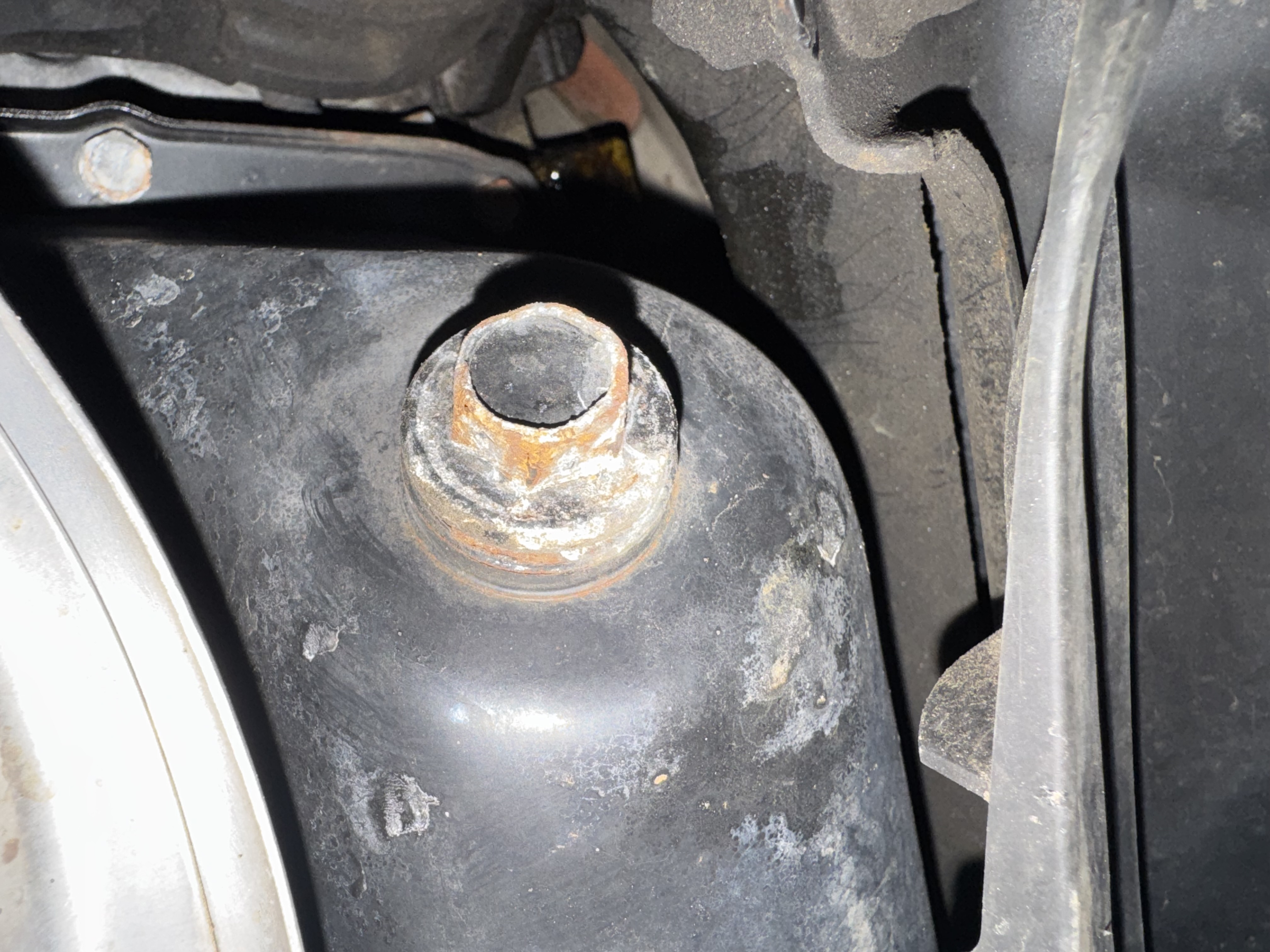
On this visit, the story was classic: the previous shop left the old filter gasket stuck to the engine and spun a new filter on top. As soon as oil pressure came up, it weeped around the doubled gasket. The drain plug had also been over-tightened and the aluminum crush washer flattened into a sharp ridge, leaving a slow seep.
Our repair process:
- Correct the filter and gasket We removed the incorrect filter, carefully cleaned the sealing surface, and verified there were no scratches or burrs on the engine’s filter land. We installed the correct filter (OEM-quality spec, correct bypass and gasket size), pre-lubed the seal, and torqued appropriately by hand with a calibrated wrench when applicable. No air tools.
- Address the drain plug and washer We inspected the pan threads and confirmed they were still within tolerance. We replaced the crush washer with the correct material and profile for this vehicle and torqued the drain plug to spec. If the threads had been compromised, we were ready to Time-Sert on-vehicle or discuss pan replacement depending on severity and long-term reliability.
- Verify oil type and fill procedure We drained and refilled with the correct grade and specification oil, replaced the filter with the right part, and set the level precisely after a controlled warmup. For many Subarus we service in Hartford County, we prefer full synthetic 5W-30 at 3,000-mile intervals to protect seals and keep internals clean. For other vehicles, we match or exceed the OEM spec and do not recommend extended change intervals that shorten engine life.
- Clean and re-secure the splash shield We cleaned oil from the subframe, exhaust, and shields to prevent burnt oil odors. We installed new push clips or hardware where needed so the undertray is secure and rattle-free.
- Confirm no leaks and verify operation After a 20–30 minute run and a road test, we rechecked for leaks under UV light, verified oil pressure and level, and scanned for any engine codes or anomalies. We recorded final torque values and took after-photos for your records.
- Educate and set you up for success We reviewed what went wrong at the previous visit, showed the double-gasket and deformed washer, and talked through service intervals. We placed a mileage reminder and added this service to your digital history so you can track it. We’ll never pressure you into unnecessary work—just the right fix, explained clearly.
Results: no leaks, no smoke, and stable oil pressure. Most importantly, peace of mind on your drive around Granby, Simsbury, Suffield, and beyond.
Why a careful oil change matters more than you think
- Engine protection: Oil isn’t just lubrication; it’s cooling and cleaning. A leak or wrong viscosity can trigger timing issues, accelerated wear, and even catastrophic failure if oil level drops too low. - Safety and environmental impact: Oil on the exhaust can smoke and smell, and leaks end up on your driveway, roads, and groundwater. Fixing it correctly keeps your car and our community clean. - Cost control: A careful, documented oil service prevents expensive future repairs—stripped pans, damaged cam phasers, or bearing failure. Rushing a 30-minute job can add zeros to your repair bill later. - Reliability in New England weather: Hartford County winters and hot summers demand the correct oil and a perfect seal. We match the oil to your engine and conditions, not a one-size-fits-all drum.
Our philosophy at College Highway Auto is simple: do it once, do it right, and keep your engine healthy with sensible intervals. We’ve cut open enough filters and resealed enough pans to know that 3,000-mile intervals with quality full synthetic oil keep engines cleaner, especially on vehicles known for varnish or seal issues. For many Subaru engines we see, full synthetic 5W-30 and shorter intervals help prevent the seal hardening and varnish buildup that can lead to bigger problems. We tailor specifics to your make and model and never recommend extended intervals that risk your engine’s longevity.
When the old oil filter’s rubber gasket sticks to the engine and a new filter is installed, you end up with two gaskets. They can’t seal evenly under pressure, so oil seeps or pours out once the engine runs. The fix is to remove the filter, clean the sealing surface completely, and install the correct filter with a properly lubed gasket and proper torque.
Overfilled engines may show foamy oil on the dipstick, a rough idle, smoke, or even misfires if oil is drawn into the intake. Underfilled engines can trigger a low oil light, ticking or rattling on startup, or variable valve timing codes. We confirm by measuring the level hot and cold per the manufacturer procedure and checking oil pressure with a mechanical gauge if needed.
Often, yes. Many leaks are caused by a crushed or incorrect washer or over-torque. We inspect threads, replace the correct washer, and torque to spec. If threads are damaged, we can perform a permanent thread repair (like a Time-Sert) without replacing the oil pan in many cases. If the pan metal is too compromised, we’ll discuss replacement.
We use high-quality full synthetic oil that meets or exceeds the vehicle’s OEM specification. For many Subaru engines we service, we commonly recommend full synthetic 5W-30 with 3,000-mile intervals to keep seals healthy and internals clean. For other makes, we follow the exact OEM viscosity and specification and still prefer shorter, protective intervals. We do not recommend extended oil change intervals because we see increased varnish, sludge, and seal issues over time.
If you smell burning oil or see smoke, it’s best to stop and have the vehicle inspected. Oil on a hot exhaust can smoke heavily, and a significant leak can drop oil level quickly, risking engine damage. We can tow and inspect, then confirm exactly where the oil is coming from before recommending a repair.
Yes. A filter with the wrong bypass design or poor sealing can cause startup rattle, low oil pressure, or internal bypassing that lets debris circulate. A leak from a poor seal can also drop oil level. We match filters by application and quality standards, not just what happens to be on the shelf.
Rushing, using air tools, or guessing at torque flattens crush washers and overstresses threads—especially in aluminum pans. We tighten by hand with the correct torque and washer type for each vehicle. If a pan has already been damaged, we inspect and propose a lasting repair, not a temporary plug.
We verify oil spec and viscosity, install an OEM-quality filter, replace the correct drain plug washer, torque to spec, top off fluids, set tire pressures, and inspect for leaks. We check underbody panels, photograph findings, reset maintenance reminders, and road test as needed. The goal is a clean, documented service that protects your engine.
Yes. We stock and source oils that meet manufacturer approvals (VW/Audi, BMW LL-01/LL-17, Mercedes, Porsche, etc.) and use the correct cartridge tools and torque values. We document spec compliance and confirm levels using factory procedures.
Schedule a quick inspection. We’ll verify the oil level, clean the area, add UV dye, and pinpoint the leak. Most issues—double gaskets, wrong filters, deformed washers—are straightforward to correct. The key is to catch it early before low oil causes engine damage.