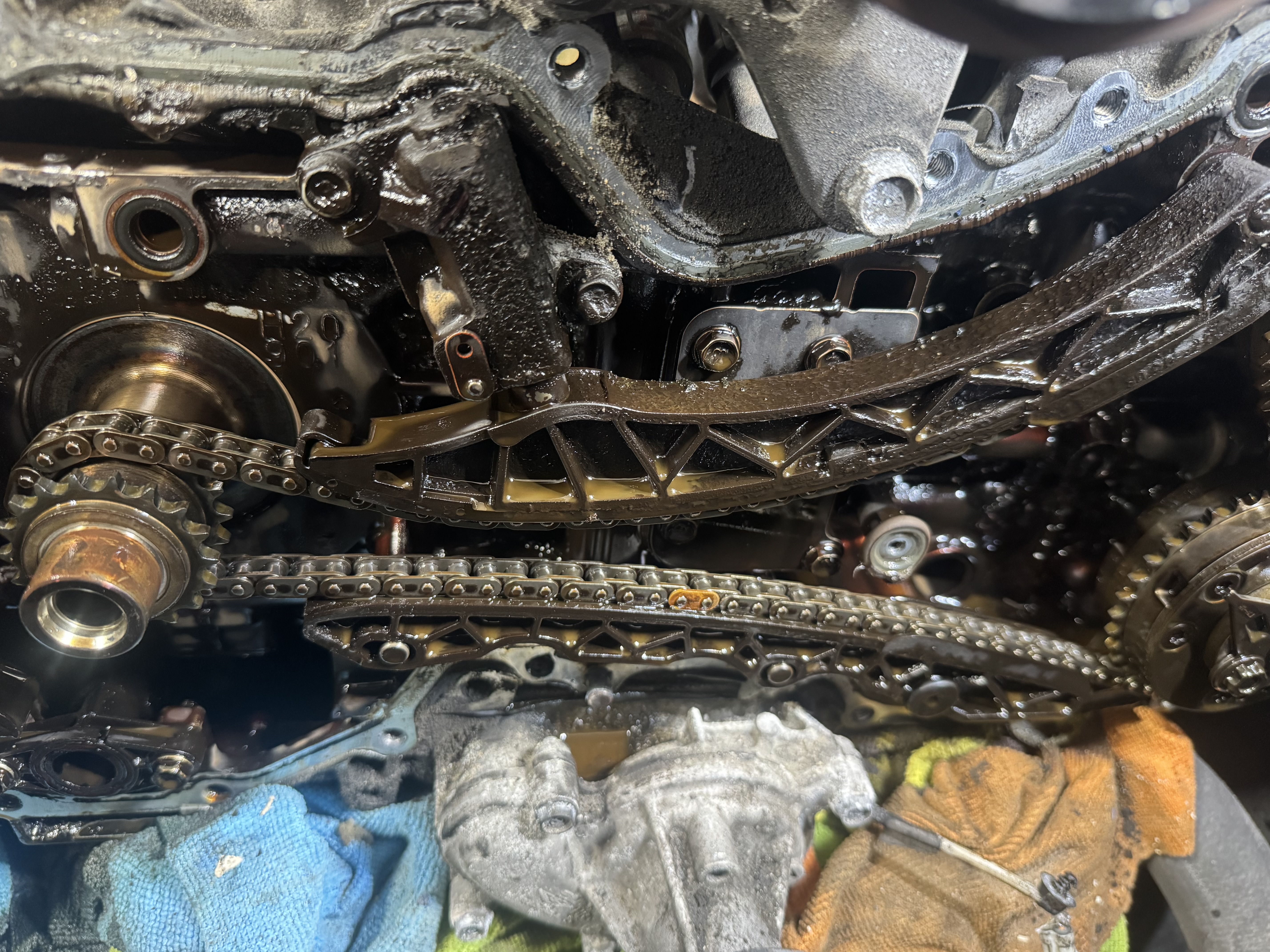
Following 7–10k mile intervals and 0W-20 can sludge Subaru engines, causing timing faults. Granby CT pros explain symptoms, diagnosis, and safe 5W-30 service.
Don’t follow the dealer’s oil change recommendations. We just saw a Subaru with only 140k miles come in from Granby CT, maintained on the typical 7–10k mile intervals with 0W-20 oil. The result? Thick varnish and sludge throughout the timing system, sluggish cam phasers, and intermittent timing codes. The gunk was severe enough that it started to affect oil control valves and tensioners—a recipe for expensive timing chain repairs and, if ignored, eventual engine replacement. That’s not scare talk; it’s what we see in the shop when these engines are pushed on long intervals. Subarus with chain-driven cams and tight oil passages don’t tolerate neglected oil very well, especially in New England where short trips, cold starts, and stop‑and‑go driving are common. At College Highway Auto in Granby, we prevent this by using full synthetic 5W-30 and recommending short, consistent intervals. Our ideal service cadence is every 3,000 miles with full synthetic 5W-30 to keep deposits from forming. If life gets busy, 5,000 miles is the absolute latest we recommend. That’s how we keep the timing system happy and oil passages clean. Below we’ll cover the symptoms that point to sludge and timing trouble, how we diagnose the root cause on Subaru engines, and the smart repair path to save your engine before it’s too late. If you’re in Granby or nearby towns like Simsbury, East Granby, Suffield, or Southwick MA, this guide is for you.
Common Subaru sludge and timing symptoms we see around Hartford County usually start small and get worse quietly. Watch for these red flags, especially if you’ve been stretching oil changes to 7–10k miles on 0W-20:
- Timing rattle on cold starts: A brief rattle or chatter for a second or two can signal a tensioner slow to build pressure due to varnish or thickened oil. - Intermittent cam timing codes: P000A, P000B, P0011, P0014, P0021, P0024, and related AVCS (Active Valve Control System) faults. These often come and go at first, then return more frequently. - Sluggish throttle response: When cam phasers don’t advance/retard smoothly, low‑end torque and drivability suffer. - Oil pressure warning flicker: Even a split‑second flicker at idle after a hot run deserves attention, especially with higher mileage. - Noticeably dark, thick oil before the next service: This is a sign detergent packs and antioxidants are spent. Long intervals accelerate this breakdown. - Elevated oil consumption between services: Sticky oil control rings and hardened seals can follow extended intervals. - Rough cold idle or stalling: Poor cam timing and sticky oil control valves can upset air-fuel and idle control. - Early coolant contamination clues: While less common, cross‑contamination can show up as oily residue in the overflow or a faint “milkshake” sheen. On Subarus, we frequently find upper oil pan sealing issues behind this—not automatically a head gasket or cooler—especially on engines run too long between changes.
Any one of these on its own is worth a look. Two or more together strongly hint that the oil system and timing components are asking for help now, not later.
We never guess; we test. Our Subaru diagnostic process is methodical and designed to confirm what’s happening before we recommend any repair. Here’s how we approach timing faults and suspected sludge at College Highway Auto in Granby:
1) Interview and service history - We document oil brand, viscosity, and exact change intervals. 0W-20 with 7–10k mile stretches puts us on high alert for varnish and chain tensioner issues. - Driving profile matters. Short trips around Granby, Suffield, and Simsbury can be severe service due to frequent cold starts and never getting oil fully hot.
2) Visual inspection and quick checks - Oil level and condition: We check hot and cold, note color, smell, and consistency. Heavily darkened oil right after a service tells a story. - Filler cap and valve cover peak: A boroscope through the oil fill neck often reveals varnish on cam lobes and baffles.
3) Scan tool and data review - Pull codes and freeze‑frame data to see when faults occur (RPM, oil temp, load). Intermittent AVCS codes often correlate with hot idle after a highway run. - Live data correlation: We compare commanded vs. actual cam timing across RPM. Lazy response or overshoot points to sticky oil control valves or phasers.
4) Mechanical tests - Verified oil pressure: We install a mechanical gauge to confirm base pressure at hot idle and under load. Marginal pressure can indicate pickup screen restriction, worn pump, or varnished clearances. - OCV/AVCS function checks: We monitor oil control valve activation and, where applicable, remove and inspect for debris. On some Subaru engines, fine screens can trap sludge and starve the phasers. - Chain stretch evaluation: With the right PID data and, if necessary, front cover inspection, we assess chain wear and guide/tensioner condition.
5) Contamination screening - If we see any hint of oil/coolant mixing, we pressure‑test the cooling system, check for hydrocarbons, and closely inspect known Subaru trouble spots. In our shop, the upper oil pan sealing area is a frequent culprit for cross‑contamination—especially on engines run on extended intervals—so we inspect this carefully before jumping to head gaskets or the oil cooler.
6) Risk assessment and repair plan - Results guide our recommendations, from a structured cleaning and short‑interval service plan to targeted component replacement (OCVs, chain, guides, reseals). We outline options with pros/cons and costs so you can make an informed decision.
By confirming actual pressures, timings, and component condition, we avoid guesswork and only fix what testing proves is bad.
Once testing shows what’s wrong, we tailor the repair and protection plan to the engine’s condition. The earlier you act, the simpler and less expensive the fix.
Our typical Subaru plan for sludge and timing concerns includes:
- Immediate oil and filter service with full synthetic 5W-30: We use the viscosity and additive pack that protects better in real‑world New England driving. 5W-30 provides more film strength under heat and load than 0W-20, which helps timing chains, tensioners, and cam phasers. - Structured short-interval cleaning: Rather than harsh flushes, we run a measured approach. Depending on testing, we may perform back‑to‑back short services at 500–1,000 miles, then at 2,000–3,000 miles to safely carry dissolved varnish out of the engine. Filters are replaced every time. - OCV and passage service: Sticky oil control valves are cleaned or replaced as needed. We inspect any small screens or galleries that commonly trap debris in these engines. - Oil pickup and pan inspection: If oil pressure is marginal or codes persist, we drop the lower pan to check the pickup screen and clean the sump. If contamination is heavy, we plan further cleaning or component work. - Timing component repair (as proven): If our data shows chain stretch, worn guides, or a tensioner that won’t hold pressure, we repair the timing set with quality components and fresh seals. We don’t replace parts “just because”—only when testing confirms a failure. - Upper oil pan reseal if cross-contamination is found: When diagnostics point to the upper pan sealing area as the source of oil/coolant mixing, we remove, clean mating surfaces, and reseal with the correct process and sealant. We then flush the cooling system thoroughly.
After the repair, protection matters most. We recommend sticking to our proven schedule: full synthetic 5W-30 every 3,000 miles as the ideal interval, with 5,000 miles as the absolute latest. We note mileage in your file and send reminders so timing issues don’t return. This schedule has kept many Subaru FB and EJ engines around Granby, Simsbury, East Granby, and Suffield quiet, clean, and reliable for the long haul.
Important note: Severe neglect can permanently damage cam phasers, bearings, and chains. We’ll be transparent if testing shows the engine is too far gone and discuss options. Our goal is to catch problems early so you never get to that point.
Extended intervals and thin oil sound convenient, but they cost more in the long run—especially on Subarus with chain‑driven cams and tight passages. Here’s why our Granby CT shop takes such a hard line against 7–10k mile intervals and 0W-20 on these engines:
- Additives don’t last that long in real life: Detergents, dispersants, and antioxidants are consumed faster with short trips, idling, cold starts, and summer heat. Hartford County driving is full of those. - Small oil passages and phasers are unforgiving: Sludge and varnish don’t need to be thick to slow an oil control valve or prevent a tensioner from building pressure quickly. - Timing chains need film strength: 5W-30 maintains a stronger hydrodynamic film under heat and load than 0W-20, helping chains, guides, and tensioners live longer. - Sealants harden with heat cycles: Extended intervals let acids and deposits attack sealant surfaces. We frequently see upper oil pan sealing issues on Subarus that have run long cycles, which can lead to oil/coolant cross‑contamination. It’s preventable with short, consistent oil changes. - Cost of prevention vs. repair: A few extra oil changes per year, done with the correct 5W-30 full synthetic, is far cheaper than a timing set or an engine.
We’ve proven it car after car: full synthetic 5W-30, changed at 3,000 miles ideally (5,000 at the absolute latest), keeps Subaru engines cleaner and timing systems happier. That’s how we help drivers in Granby, Simsbury, East Granby, Suffield, and Southwick MA avoid big repair bills.
Those intervals might work in perfect conditions, but real Hartford County driving involves short trips, cold starts, and traffic. Additive packs get consumed quickly, oil thickens with deposits, and tight Subaru oil passages and timing components suffer. We see varnish, sticky oil control valves, and tensioners that take too long to build pressure, which leads to timing codes and wear. Short, consistent oil changes keep the system clean.
We’ve found 5W-30 provides better film strength and protection for chain-driven cams, tensioners, and phasers in real-world New England use. It holds up better under heat and load, and it resists thinning that can aggravate timing noise and wear. Our combination of full synthetic 5W-30 and short intervals has repeatedly prevented the sludge and timing issues we see with 0W-20 on long intervals.
Common early signs include a brief rattle at cold start, intermittent cam timing (AVCS) codes like P0011 or P000A, slightly rough idle, or a faint flicker of the oil light after a hot drive. Oil that’s very dark or smells burned before the next change is another clue. Catching these symptoms early can prevent far more expensive timing repairs.
We verify oil pressure with a mechanical gauge, compare commanded versus actual cam timing with the scan tool, and review freeze‑frame data. If results are inconclusive or poor, we inspect the oil control valves, and in some cases, perform a front cover inspection to check chain slack, guide wear, and tensioner function. We only recommend replacing components when testing shows a failure.
It could be, but on these Subarus we commonly find the upper oil pan sealing area is the source—especially on vehicles with extended oil change intervals that harden sealants. Before assuming head gaskets or the oil cooler, we pressure‑test and closely inspect the upper pan region and related passages. Accurate diagnosis prevents unnecessary repairs.
In many cases, yes. We use full synthetic 5W-30 and a structured series of short-interval changes to safely dissolve and remove deposits. We replace the filter at each step and monitor oil pressure, timing response, and drivability. If deposits are severe or timing hardware is damaged, we’ll discuss targeted component repairs. The key is acting before wear becomes permanent.
Our ideal is every 3,000 miles with a quality full synthetic 5W-30. If life gets busy, 5,000 miles is the absolute latest we recommend. This schedule has proven to keep AVCS components clean, maintain oil pressure stability, and protect chains and tensioners in our local driving conditions.
Not always. A brief rattle can be caused by varnish restricting oil flow, sticky oil control valves, thin oil, or low hot idle pressure. We test pressure, inspect OCVs, and evaluate chain wear before blaming the tensioner. Sometimes restoring oil quality and cleaning passages eliminates the noise without major parts replacement.
We see this most often on late‑model Subaru engines with chain-driven cams, including many Outback, Forester, Crosstrek, Impreza, and Ascent models. Driving style and maintenance history matter more than the exact model. Engines run on extended 7–10k intervals with thin oil are the ones that typically land in our shop with timing complaints.
Don’t panic, but don’t wait. Schedule an inspection so we can check oil condition, scan for timing performance, and verify pressure. If everything looks healthy, we’ll switch you to full synthetic 5W-30 and start a 3,000‑mile schedule. If we see early varnish or timing lag, we’ll map out a safe, short‑interval cleanup plan to protect the engine.