Truck misfire, ticking, or dead cylinder on your Chevy or GMC with a 5.3/6.2? College Highway Auto in Granby CT diagnoses GM V8 AFM/DFM collapsed lifters and VLOM issues the right way.
When a late-model GM V8 rolls in shaking at idle, ticking loudly, and down on power, our ears perk up. Around Hartford County and right here in Granby CT, we see a recurring theme on Chevy Silverado, GMC Sierra, Tahoe, Suburban, Yukon, and even some vans: a failed AFM/DFM lifter or a problem in the VLOM (Valve Lifter Oil Manifold) that feeds it. In this truck’s case, it barely ran and set persistent misfire codes. After methodical testing, we confirmed a collapsed lifter tied to the Active Fuel Management system and contamination in the VLOM oil circuits. The truck received updated lifters on both banks and a new VLOM. It left idling smooth, quiet, and with its power back.
The key is doing the diagnosis first. A rough GM V8 can be caused by ignition, fueling, compression, control strategy, or oiling faults. Throwing parts at it is expensive and risky, especially on engines that are sensitive to oil pressure control and solenoid timing. Below we’ll explain how we recognize the symptoms, how we test, and which repairs actually fix the root cause so you can get your Chevy or GMC back to work reliably.
Common signs your GM 5.3L, 6.0L, or 6.2L may have a collapsed AFM/DFM lifter or a VLOM fault:
- Check engine light with misfire codes: often P0300 (random misfire) or a specific cylinder misfire like P0301–P0308. - Noticeable tick or tap from the valve cover area, especially under light throttle or at idle after warm-up. - Rough idle, shake at stoplights, and a clear loss of power on hills or when towing. - Cylinder that seems “dead” when you pull coil power or do a balance test—no change because the valve isn’t moving. - Intermittent misfire that worsens as oil gets hot and thin, or after extended highway runs. - Elevated misfire counters for one AFM cylinder on scan data, while others look normal. - Oil pressure that looks fine at the dash but control-side oil pressure to the VLOM is not correct when commanded (requires a scan tool to verify).
What’s going on inside? AFM/DFM uses special lifters that can mechanically “collapse” when the engine computer commands cylinder deactivation. That switch-over relies on clean oil at the right pressure, timed through the VLOM and its solenoids. If a lifter sticks collapsed or partially collapses when it shouldn’t—or if the VLOM leaks, clogs, or misroutes oil—the valve motion stops, the cylinder loses compression, and you get a consistent misfire and tick.
We don’t assume lifters first. The sequence matters to avoid unnecessary engine work:
1) Confirm the complaint - Road test and listen for valve train tick versus exhaust leak tick. We note when the noise occurs (hot/cold, load transitions). - Verify misfire data on a factory-level scan tool, including misfire counters per cylinder, AFM/DFM state, and any related codes (P0300 range, oil pressure/temperature codes like P0521, VVT/solenoid codes).
2) Baseline engine health - Relative compression test using a high-speed scope to quickly see if one cylinder’s contribution is low. - If relative compression flags a suspect hole, we do a traditional compression and leak-down test to quantify cylinder sealing.
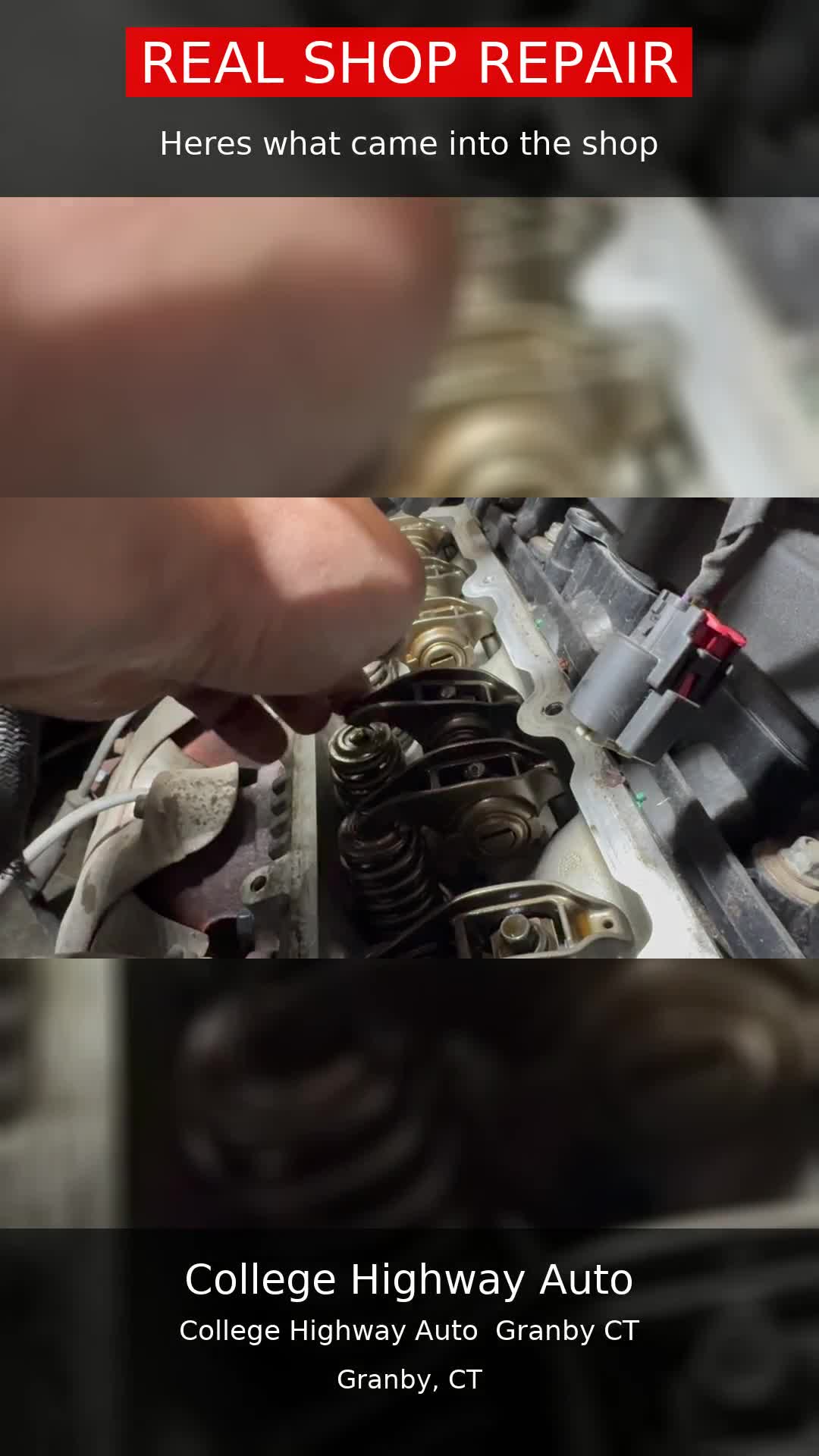
3) Valve motion check - Remove the valve cover on the bank with the suspect cylinder. While cranking or using a low-speed running test (when safe), we observe rocker movement and compare to a known-good cylinder. A collapsed AFM lifter shows dramatically reduced or no valve lift even when cam rotation is normal. - Inspect for bent pushrods, broken rockers, or displaced lifter guides (trays). These can mimic or accompany lifter failure.
4) Oil control system tests - Inspect the VLOM (valley cover assembly) for oil contamination, debris at the inlet screens, and solenoid function. We command each AFM solenoid with the scan tool and monitor the engine’s response. - Verify overall oil pressure mechanically when needed, and compare to commanded AFM events. Good dash pressure does not guarantee proper pressure to the AFM circuit.
5) Camshaft and lifter condition - If rocker movement is poor, we borescope the lifter valley when possible or plan cylinder head removal for a visual inspection. We check for lifter roller damage and cam lobe wear. A stuck or collapsed AFM lifter can quickly wear the cam if driven.
6) Rule out the basics - Swap test ignition coils and plugs between cylinders to ensure we’re not misdiagnosing a simple ignition fault. - Verify injector operation and fuel trims. A dead injector can mimic a collapsed lifter by causing a dead hole. - Check for exhaust leaks near the manifold that can cause false O2 feedback and a tick that sounds like valvetrain noise.
7) Decision point - If a collapsed AFM/DFM lifter is confirmed, we discuss options. Sometimes the VLOM is the primary culprit (oil control fault); other times the lifter itself fails. Frequently, both have to be addressed to keep the fix from boomeranging back.
In our featured case, tests showed one AFM cylinder with near-zero effective valve lift, persistent misfire counters, and a VLOM with contaminated screens. With the head off, we verified a collapsed AFM lifter. The cam lobes checked good. The right repair was new updated lifters, new trays, new head gaskets/bolts, and a fresh VLOM with cleaned passages and a full oil service.
Once testing confirms a lifter/VLOM fault, we outline a repair plan tailored to the engine build (Gen IV 5.3/6.0/6.2 AFM or Gen V 5.3/6.2 DFM):
What we typically replace when a lifter has collapsed - Lifters: Updated GM or high-quality equivalent sets for the affected bank(s). On AFM engines, we typically replace all lifters on both banks to reduce repeat labor and ensure uniform performance. - Lifter trays: The plastic guides can wear or crack and should be renewed to hold the lifters square to the cam. - Head gaskets and head bolts: Torque-to-yield bolts are single-use; heads are cleaned and checked for flatness. - VLOM (valley cover with solenoids and oil circuit): If testing indicates internal leakage, screen blockage, or solenoid failure, replacing the VLOM is key to long-term reliability. - Related seals and gaskets: Intake, exhaust, valve cover, coolant crossover, and any disturbed O-rings. - Oil and filter: We use a quality dexos-approved full synthetic matched to your engine’s spec (many GM V8s call for 0W-20 or 5W-30); we do not recommend extended intervals given how sensitive AFM/DFM is to oil quality.
Additional items considered after inspection - Camshaft: If a roller or lobe is damaged, the cam must be replaced. We won’t guess—we measure. - Rockers, pushrods, and guides: Any bent or worn components are replaced. - Oil pump pickup O-ring and timing cover seals if there are any signs of aeration or leakage.
Our process - Disassembly is kept clean and organized to protect the engine from debris. Oil passages are flushed. - We verify all control solenoids and wiring during reassembly and perform a relearn with our scan tools. - First start is monitored for oil pressure, valve train noise, misfire counters, and any leak checks. We recheck torque and fluid levels after warm-up. - Post-repair road test confirms AFM/DFM transitions are smooth and that misfire counters remain at zero.
What about AFM/DFM delete? - We get the question often. Some customers consider converting to non-AFM lifters, a non-AFM cam, and updated valley hardware, then reflashing to disable AFM/DFM. There are pros and cons. We discuss options within current regulations and your goals. Emissions laws and inspection requirements apply; we follow applicable regulations and won’t perform illegal modifications. In many cases, restoring AFM/DFM to proper function with updated lifters and a healthy VLOM is the best street-legal path.
Maintenance going forward - Stick with high-quality synthetic oil that meets GM dexos specifications and change it often. In our climate and with short-trip use common in Granby, Simsbury, and Suffield, we recommend conservative 3,000–5,000 mile intervals depending on use. AFM/DFM systems dislike sludge, varnish, and aerated oil. - Address small oil leaks early; air intrusion and oil level swings contribute to lifter and VLOM problems. - If you tow through Avon, Canton, or up into the hills, we can set up a service plan that matches your duty cycle.
Driving on a collapsed lifter is not just annoying—it’s expensive. A misfiring GM V8 dumps raw fuel into the catalyst and can overheat and melt the substrate, turning a lifter job into a catalytic converter job. Prolonged ticking can grind down a cam lobe or damage a roller, sending metal through the oiling system and risking bearings. Meanwhile, the VLOM is still trying to route oil for cylinder deactivation and can cross-feed oil to the wrong lifter if clogged, keeping the problem alive.
Catching the issue early, proving the failure with testing, and replacing the right parts is what prevents repeat visits. At College Highway Auto in Granby CT, we’ve helped drivers from East Granby to Southwick MA get their Chevy and GMC trucks back to hauling, plowing, and daily driving without the constant misfire and tick. Proper diagnosis now saves money later—and keeps your truck earning its keep.
We most often see failures on AFM-equipped Gen IV 5.3L and 6.0L/6.2L engines (roughly 2007–2014) and DFM-equipped Gen V 5.3L/6.2L engines (2014+). Silverado, Sierra, Tahoe, Suburban, Yukon, and some vans can be affected. Failures aren’t universal, but oil quality, duty cycle, and mileage play big roles.
We verify with data and mechanical checks. After confirming misfire counters on a scan tool, we do relative compression, then inspect valve motion under the valve cover. A collapsed lifter will show reduced or no rocker movement even though the camshaft is turning. We also swap coils and check injector operation to rule out simple causes before committing to engine work.
We don’t recommend it. Driving misfiring can damage the catalytic converters, wash down cylinder walls, and if the roller or cam lobe starts to go, metal can circulate through the engine. Towing it to the shop could save you from a much larger repair.
Not always, but very often. If our testing shows the VLOM is leaking internally, has clogged screens, or its solenoids don’t respond correctly, we include it in the repair. Replacing lifters without addressing a faulty VLOM can lead to a repeat failure.
Only if inspection shows damage. We measure lift, inspect lobes, and check the lifter rollers. If the cam is clean and within spec, we keep it. If we find pitting, scoring, or abnormal wear, we’ll recommend replacement and explain why before proceeding.
Costs vary widely based on engine generation, parts selection (OE vs. equivalent), and whether the camshaft or other components are damaged. After diagnosis, we provide a detailed estimate. Replacing lifters, trays, gaskets, and a VLOM is a significant job, but confirming the failure first keeps you from overspending on guesswork.
There are paths to convert engines with non-AFM hardware and reprogramming, but emissions regulations and inspection rules apply. We discuss legal options and your goals, and in many cases restoring AFM/DFM with updated lifters and a healthy VLOM is the best street-legal fix. We follow applicable laws and won’t perform illegal modifications.
Use high-quality synthetic oil that meets GM dexos specs, keep levels correct, and change oil more frequently than extended intervals—typically 3,000–5,000 miles depending on use. Short trips around Granby, Simsbury, and Suffield are hard on oil. Fix small leaks early, and don’t ignore any new ticking or misfire.
Most lifter and VLOM jobs require one to three days depending on parts availability, whether machine work or cam replacement is needed, and any corrosion or broken fastener issues. We’ll give you a realistic timeline after inspection.
Yes. We back our work with a written parts-and-labor warranty. We’ll review the terms with you before we start, and we use high-quality parts and careful procedures to help ensure a reliable, long-lasting repair.