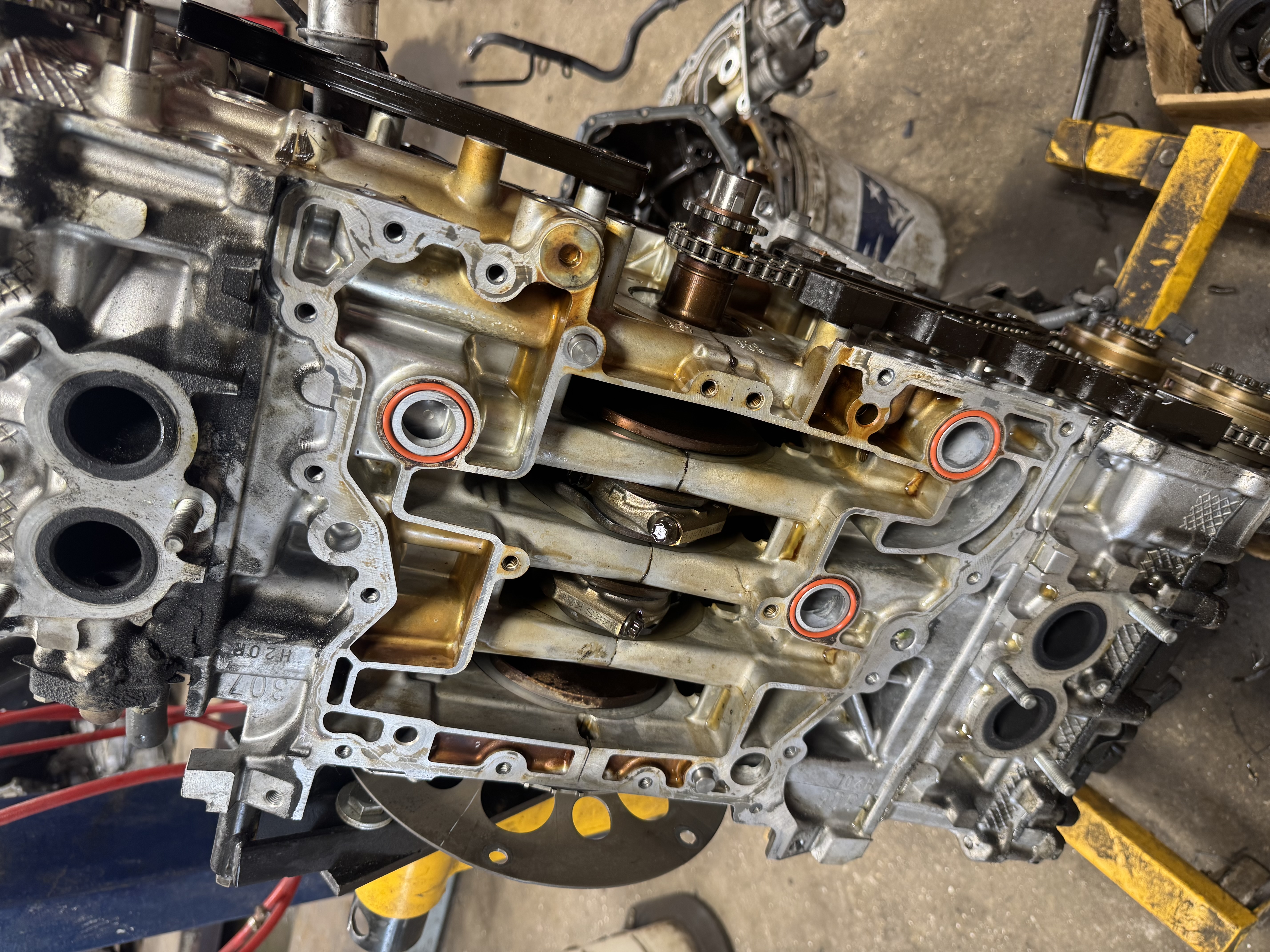
Oil in the radiator on a Subaru FB engine? In Granby CT we often find failed upper oil pan seals causing cross-contamination. Careful testing, cleaning, and reseal.
What happened here? Another FB-series Subaru rolled into our Granby, CT bay with oil in the radiator. It’s a sight that makes any driver’s stomach drop—brown, creamy residue in the coolant bottle and a radiator that looks more like a cappuccino than a cooling system component. While many jump straight to a blown head gasket, our experience with Subaru FB engines (FB20, FB25) in Hartford County tells a different story we see again and again: failed upper oil pan sealing surfaces that allow pressurized engine oil to cross over into the cooling system.
If you’re driving through Granby, Simsbury, East Granby, Southwick, or the surrounding towns and notice oil in your coolant, don’t panic and don’t start ordering parts. We take a methodical approach. We verify the contamination, test the cooling system and oil pressure, inspect known trouble points, and confirm the actual failure before recommending any repair. When the upper pan seal is the culprit, an engine-out reseal and a proper system decontamination solves the root cause and protects your engine.
We also see a pattern: extended oil change intervals harden and shrink seals over time, especially in FB motors. That’s why we recommend full synthetic 5W-30 and consistent 3,000-mile oil changes to keep seals healthy and passages clean. It’s an old-school interval for a reason—it works for these engines. Read on for the symptoms, our diagnostic game plan, and how we fix this the right way so you can get back to confident, clean running.
Oil and coolant don’t play well together. If your Subaru has oil in the radiator or reservoir, you might notice one or more of these symptoms:
- Brown or tan sludge in the coolant overflow bottle or inside the radiator cap area - Oily film or rainbow sheen floating in the radiator or expansion tank - Heater performance that comes and goes, or a sweet, hot smell after driving - Cooling system hoses that feel unusually soft or swollen from oil exposure - Intermittent high operating temperature on long grades or at low speeds - A sticky residue around the reservoir cap or radiator neck - Misleading “OK” engine oil on the dipstick—because the contamination often moves oil into coolant, not coolant into oil
If you’re in Granby or nearby towns and you see these signs, it’s time for a professional inspection. The goal is to pinpoint the source of contamination before any damage spreads to the heater core, radiator, water pump, or bearings.
Before calling any part guilty, we follow a step-by-step Subaru FB diagnostic path designed by experience here at College Highway Auto:
1) Confirm the contamination - We visually inspect the radiator and expansion tank for oil sheen and sludge. - We may use coolant test media to distinguish oil-based contamination from combustion byproducts. - We check for coolant odor and texture changes that indicate petroleum presence.
2) Evaluate engine operation - Look for any misfires, coolant loss, or bubbling in the overflow that might suggest combustion intrusion. We do not assume head gasket issues—FB engines frequently have sealing faults elsewhere.
3) Pressure testing the cooling system - We pressurize the cooling system cold and warm. Oil in the coolant often shows up when hot oil pressure overcomes a compromised seal. A cooling system pressure test can help us find cross-leaks, but we pair it with additional checks to catch oil-side pressure influences.
4) Oil pressure and leak path consideration - Oil runs at much higher pressure than coolant, especially with RPM. If a sealing surface between an oil gallery and a coolant passage fails (such as at the upper oil pan interface on FB engines), oil will move into the coolant—rarely the other way around. We evaluate this dynamic with measured oil pressure readings and by observing contamination patterns after hot runs.
5) Inspect known FB trouble spots first - Upper oil pan-to-block sealing: These engines use RTV/FIPG-style seals and gaskets at the upper oil pan. Over time, heat and long oil change intervals can harden those seals. If the interface near an adjacent coolant jacket opens up, oil can enter the cooling system. - Front cover and related O-rings: We also look at front timing cover interfaces and oil gallery plugs or O-rings that can mimic similar symptoms. - Oil cooler check (if equipped): While a faulty oil cooler is a classic mixing point on many cars, we do not assume it’s the cause on FB motors. We pressure test and isolate the cooler as needed, but our Granby bay has seen far more upper pan seal faults than coolers or head gaskets on these.
6) Chemical and block tests as context, not a verdict - A combustion leak test (block test) is used judiciously. On FB engines with oil-in-coolant but no overheat, the test often returns negative—supporting the non-head-gasket path. If the test is positive, we verify thoroughly before making any head gasket call.
7) Dye and borescope where it helps - UV dye in engine oil during a short, carefully monitored run can help us trace seep points externally. Internal cross-leaks won’t always reveal themselves externally, but this step can rule out other paths. A borescope can be used to inspect certain passages during disassembly planning.
8) Plan the repair based on proof - Only after confirming the leak path do we recommend an engine-out upper oil pan reseal or other specific corrections. We document findings and show you photos so you understand exactly what failed and why.
This process ensures we fix the real cause the first time. It also protects you from unnecessary head gasket jobs or random part swaps that don’t resolve the contamination.
Once we’ve confirmed the upper oil pan sealing is the source of oil in the coolant, we lay out a clear repair plan that addresses both the root cause and the contamination it created.
Our Subaru FB upper oil pan reseal and decontamination process typically includes:
- Engine removal for access: The upper oil pan on FB engines is sandwiched tightly against the block and front cover components. Proper access ensures correct cleaning, sealing, and torque sequence. Cutting corners here is how repeat leaks happen.
- Precise surface preparation: We methodically remove the old RTV/FIPG and gasket material, then clean mating surfaces to bare metal without gouging. Oil residue can sabotage new sealant—every trace must be removed. We follow Subaru’s sealing bead patterns and cure times, using high-quality FIPG specified for oil resistance.
- Inspect and replace related seals and O-rings: While the engine is out, we inspect front cover interfaces, cam carrier areas (where applicable), and coolant pipe O-rings that may be heat-hardened. Replacing inexpensive seals proactively helps prevent future weeps. We only replace what inspection proves compromised or lifecycle-prudent; we do not blindly upsell parts.
- Cooling system decontamination: Oil in the coolant coats passages and can degrade rubber. We perform a thorough multi-stage flush using an appropriate cooling system cleaner that can emulsify oil without harming aluminum. This process usually involves multiple heat cycles and drain/fill steps until the coolant runs clear and free of sheen. On severely contaminated systems, we may recommend replacing the radiator cap, thermostat, and any swollen hoses. If the radiator or heater core flow is compromised even after cleaning, we’ll discuss options based on measured flow, not guesswork.
- Oil and filter service: We drain the oil, replace the filter, and refill with high-quality full synthetic 5W-30. After initial running and a check for seal integrity, we may recommend an early follow-up oil change to remove any residuals that break loose during the first few heat cycles post-repair.
- Verification and road test: With the engine resealed, we pressure test the cooling system, confirm no mixing, run to temperature, and verify heater performance and fan cycling. A road test ensures stability under real-world load and confirms there’s no renewed contamination.
- Documentation: We provide photos of the failed sealing surfaces and of the reseal process so you can see exactly what was done. You’ll leave with a clear plan for follow-up checks and maintenance intervals tailored to protect this engine.
Turnaround time depends on parts availability, the extent of contamination, and what we find during inspection. Most FB upper pan reseals with full decontamination take multiple days. We’ll set expectations up front so you’re never left guessing.
Oil in your Subaru’s cooling system is more than a cosmetic mess. If left untreated, it can:
- Soften and swell radiator and heater hoses, increasing the risk of sudden hose failure - Coat the inside of the radiator and heater core, reducing heat transfer and clogging small passages - Contaminate the coolant pump seal faces, shortening water pump life - Create hot spots that encourage overheating and long-term engine stress - Turn into a cycle where partial cleanups keep recontaminating the system if the true leak path isn’t fixed
In the longer term, oil contamination can jeopardize your engine’s reliability and your wallet. The good news: when we catch this early and address the real cause—often the upper oil pan sealing on FB engines—your Subaru can return to clean running and stable temperatures.
Prevention counts. Extended oil change intervals allow varnish and acids to harden seals, especially in FB engines that run hot and lean for efficiency. We recommend full synthetic 5W-30 and a 3,000-mile oil change interval for local Granby and Hartford County driving. That schedule keeps detergents fresh, minimizes sludge, and helps preserve those critical sealing surfaces. It’s a simple habit that pays off in fewer leaks and cleaner cooling systems.
No. On FB-series Subaru engines (FB20/FB25), we frequently find failed upper oil pan sealing that lets pressurized oil migrate into the cooling system. We test for combustion gases and verify all likely leak paths before mentioning head gaskets. Many of these cases are not head gaskets at all.
The FB engine’s upper oil pan uses sealant and gaskets where oil passages run close to coolant jackets. When those seals harden or shrink, hot, high-pressure oil can squeeze past the interface and enter the cooling system. Oil pressure is typically higher than coolant pressure, so the flow tends to go from oil to coolant.
It can, but in our Granby shop we see the upper oil pan sealing area fail far more often than the oil cooler on FB engines. We isolate and pressure test the cooler as part of the workflow, but we never assume it’s the cause without proof.
Short trips risk further contamination and can damage hoses, the radiator, and the heater core. If you must drive, keep it minimal and monitor temperature closely. We recommend scheduling a diagnosis soon so we can confirm the source and prevent larger failures.
If the upper oil pan seal is confirmed failed, the correct fix is engine-out service to reseal the upper pan per factory patterns, inspect related O-rings and interfaces, and then perform a thorough multi-stage coolant decontamination. We also service the engine oil and filter and verify no residual mixing before delivery.
No. A flush will only clean symptoms. If the leak path remains, oil will re-enter the coolant. We always fix the root cause—often the upper oil pan sealing on FB engines—then flush the cooling system until it’s clean and stable.
Plan on multiple days. Time depends on parts availability, contamination severity, and what we find during inspection. We’ll give you a clear estimate and timeline after diagnostic confirmation.
Use high-quality full synthetic 5W-30 and change the oil every 3,000 miles. Avoid extended oil change intervals. Fresh oil keeps seals pliable and passages clean, reducing the chance of seal shrinkage and cross-leaks on FB engines.
We most often see this on FB20 and FB25 engines found in many Forester, Outback, Impreza, and Crosstrek models from the early 2010s onward. Exact models and years vary, so a proper VIN-based check and inspection is best.
No. We document findings and test before recommending any repair. That’s how we avoid unnecessary part replacement and make sure the fix lasts.