Humming or whine from the front end? We diagnose and repair front differential noise and failures in Granby, CT. Clear testing first, quality fixes that last.
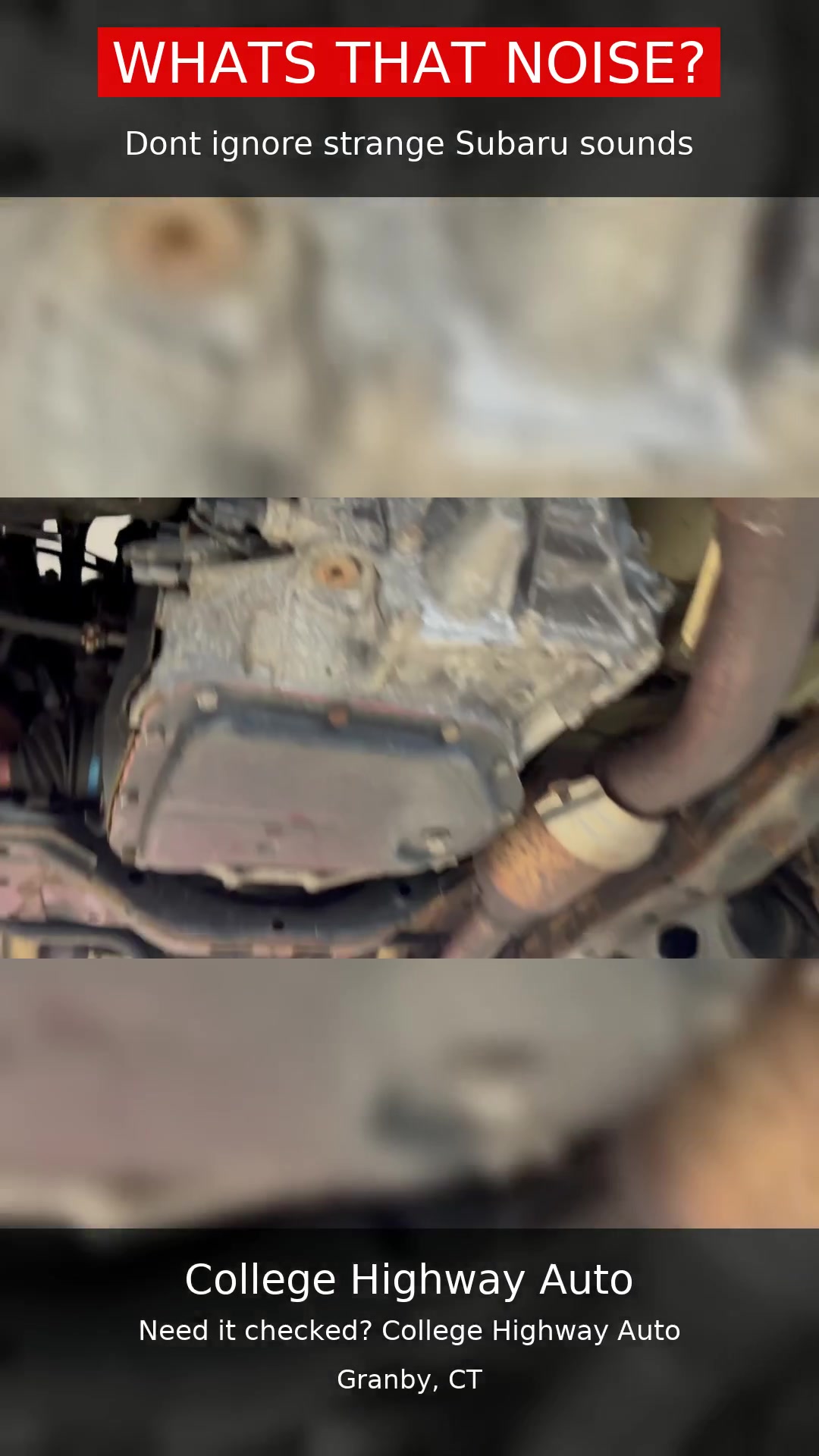
What’s that noise? On this visit, it was a front differential that cried uncle after too many miles on so‑called “lifetime” fluid. The SUV rolled into our Granby, CT shop with a steady front‑end hum that turned into a growl on decel. The owner had followed extended service intervals and had never serviced the front diff. On the lift and during testing, we confirmed bearing wear and a chewed‑up ring and pinion. Unfortunately, by the time a front differential gets loud, it’s usually beyond a simple fluid change.
If you’re hearing a new whine, hum, or clunk from the front of your AWD or 4x4, don’t wait. At College Highway Auto, we serve drivers across Granby, East Granby, Simsbury, Suffield, Hartland, and the rest of Hartford County with methodical diagnosis before we recommend any parts. Differentials are durable when you feed them clean, correct gear oil and keep seals in check. Starve them—or run contaminated fluid for years—and the bearings and gears pay the price.
This page walks through what those noises mean, how we test, what repairs might make sense, and how to prevent another failure. We won’t guess, and we won’t overpromise. We’ll show you what we find so you can decide the best next step for your vehicle and your budget.
Common front differential noise and drivability clues we see in Hartford County:
- Steady humming that follows vehicle speed: Often starts soft around 30–40 mph and grows with speed. If the pitch changes when you swerve gently left or right, that can suggest a wheel bearing. If the pitch follows throttle (on‑throttle vs off‑throttle), think differential or drivetrain. - Whine on acceleration, growl on deceleration: Classic sign of ring‑and‑pinion wear or pinion bearing preload loss. On throttle, the drive side of the gear set sings. Off throttle, the coast side complains. - Rhythmic rumble that feels like tire noise: Cupped tires can mimic diff noise. We always inspect tire wear patterns first because swapping front tires side to side may temporarily change the sound if tires are the culprit. Differential noises won’t change with tire rotation. - Clunk when shifting from drive to reverse or engaging 4WD: May indicate excessive backlash in the ring and pinion, worn carrier bearings, or loose driveline joints. - Vibration under load: Could be a combination of diff gear wear and axle/CV joint play. We verify with on‑lift run and a stethoscope. - Burnt gear oil smell or visible leak at axle seals or pinion seal: Low fluid level accelerates bearing failure. Moist vent hoses can also suggest fluid foaming/overheating. - Metal “glitter” on the magnetic drain plug: Some fuzz is normal at service intervals. Shards, chunks, or heavy paste point to active wear.
Early attention matters. We regularly find that a front diff with fresh fluid every 30,000 miles can run quiet for the life of the vehicle. Let that interval stretch to “whenever,” and the first symptom you hear may be a wallet‑sized warning.
We do not replace differentials on a hunch. Here’s how College Highway Auto separates tire, wheel bearing, CV, transfer case, and front differential noises:
1) Interview and road test - We ask where and when you hear it: speed, throttle, turns, and temperatures. Longer commutes on Route 202/10, towing, or frequent ski trips in New England slush all matter. - Controlled road test: steady speeds, light and heavy throttle, coast, and gentle lane sweeps. We listen for on‑throttle whine vs coast growl and note if the sound changes with steering input.
2) Tires and wheel bearings first - Tire inspection: pressures, rotation pattern, and cupping. Cupped tread can sound exactly like a failing bearing. - Wheel bearing check: hands‑on play, spin test, and chassis ears to isolate corners. If the noise tracks with steering input and corner load, bearings jump to the top of the list.
3) Driveline and CV shaft evaluation - Check inner and outer CV joints for play or torn boots. Clicking on turns suggests CVs; droning with straight‑ahead driving leans diff. - Inspect U‑joints/prop shaft (on some AWDs) for play and rust weeping at caps.
4) Fluid level and condition - We verify level through the fill plug and sample fluid. Dark, burnt, or metallic fluid tells a story. Heavy metal paste or flakes usually means internal bearing or gear damage. - Check for water intrusion. New England storms and water crossings can emulsify gear oil, turning it milky and weak. Once that happens, wear accelerates.
5) On‑lift run and stethoscope - With the vehicle safely lifted, we run the drivetrain in 2WD/AWD simulation as applicable. Using a chassis stethoscope and electronic ears, we compare noise at the diff housing, hubs, transfer case, and transmission. - We note tone changes on light vs heavy throttle, which side of the housing is loudest, and whether the pinion area is the hot spot.
6) Mechanical measurements (when indicated) - Backlash check: If we suspect ring and pinion wear, we measure backlash and feel for roughness while rotating the pinion by hand. - Preload feel: Excessive free‑spin or gritty rotation points to failing bearings. - Contact pattern verification: If we’re already into the unit for a seal/bearing job, we use marking compound to read the gear mesh.
7) Related systems - Transfer case operation and fluid (for 4x4/AWD trucks and SUVs) to ensure there isn’t a separate whine upstream. - ABS sensors and wheel speed data: A failing tone ring can sometimes be mistaken for a mechanical hum; scan data helps us rule that out.
At each step, we document with photos, video, and samples so you can see and hear what we’re seeing. If the noise isn’t conclusive on the first visit, we’ll discuss safe monitoring vs proactive service. We do not guess and throw parts.
Repair depends on what the testing shows. We outline options and prioritize keeping you safely on the road in Granby without surprises.
Possible outcomes:
- Fluid service and recheck: If the diff is quiet but fluid is old or slightly discolored with minor paste on the magnet, a drain and fill with the correct GL‑5 gear oil (often 75W‑90 full synthetic) is a smart first step. We road test after service and re‑inspect in 500–1,000 miles. This won’t fix damaged gears, but it can quiet light bearing noise and, more importantly, halt further wear.
- Seal replacement and vent service: Pinion and axle seals leak when age and heat harden them. We replace seals, verify vent operation, and set the correct fluid level. A dry differential runs cooler and lasts longer.
- Bearing replacement: If we find roughness or play, we can replace pinion and carrier bearings and set proper preload. On pinion bearings, that means new races, a new crush sleeve (or shim pack, depending on design), and accurate torque to achieve preload. We use inch‑pound torque measurements to confirm rolling resistance; guessing here is how you ruin a gear set.
- Ring and pinion replacement or full rebuild: If the contact pattern is bad, teeth are pitted or chipped, or backlash is outside spec due to wear, a gear set is the honest fix. We set pinion depth with the proper gauges, establish backlash with side shim adjustments, and confirm mesh with marking compound across drive and coast. This is precision work: a small pattern error becomes a big noise later. After assembly, we perform a careful break‑in procedure: short drives with cool‑down cycles, no heavy towing for the first 500 miles, and a post‑break‑in fluid change to clear initial wear particles.
- Replacement assembly: In some platforms, a complete low‑mileage used or reman front diff may be the best value. We will show you the pros and cons. Used units are cost‑effective but condition is unknown; remans cost more but often include updated parts and warranty. We install, verify seals, set fluid, and road test. We don’t recommend replacements unless testing supports it.
What we did on this visit: - Verified the hum/whine on road test and isolated it to the front differential with chassis ears. - Found burnt, metallic gear oil and excessive metal on the drain plug. - Measured looseness at the pinion and roughness through rotation. - Opened the unit: spalled pinion bearings and pitting on the drive side of the ring gear. - Recommended a full rebuild with new bearings, races, seals, and a matched ring and pinion. We set pinion depth, preload, and backlash to spec and confirmed pattern before final assembly. Fresh GL‑5 75W‑90 synthetic went in, followed by a structured break‑in and a 1,000‑mile fluid check.
We’ll never claim a fluid change will cure a chewed‑up gear set, and we won’t upsell a rebuild if testing points to tires or a wheel bearing. You’ll get a clear explanation, photos, and a plan that matches what we found.
Why address front differential noise now instead of later?
- Safety: A severely damaged differential can overheat, shed parts, or, in rare cases, lock up. Losing front‑end drive or control at highway speed on 202/10 isn’t on anyone’s to‑do list. - Cost control: Bearings that are just beginning to hum can sometimes be saved with timely service and heat management. Wait until the gear set patterns itself incorrectly and you’re into a more expensive rebuild or replacement. - Comfort: The constant droning or whine will drive you nuts on the way to Simsbury or Suffield. Fixing the cause restores that new‑car quiet. - Preventive maintenance that actually works: We don’t push extended service intervals. In our New England climate—salt, slush, steep temperature swings—fluids work harder. For most AWD/4x4 front differentials, we recommend inspecting fluid every 15,000 miles and servicing it about every 30,000 miles or 3 years, sooner if you tow, commute in stop‑and‑go, or see water crossings. Correct spec gear oil matters; not all 75W‑90s are the same. - Protecting the rest of the drivetrain: A failing front diff can transfer stress to CV axles, the transfer case, and even the transmission. Addressing the root cause prevents a cascade of failures.
At College Highway Auto in Granby, we take the time to test first, explain what we found, and help you choose the right path—whether that’s simple service and monitoring or a precision rebuild. Good parts, correct procedures, and honest intervals keep you moving through Hartford County without surprises.
Wheel bearings often get louder when the vehicle is steered slightly left or right because load shifts to one side. Differential noise is more tied to throttle: a whine on acceleration and a growl on deceleration point to gear or pinion bearing issues. We confirm with a road test, tire inspection, and an on‑lift run using a stethoscope to compare hubs, the diff housing, and the transfer case.
If the noise is from early wear or contaminated fluid, a drain and fill with the correct GL‑5 gear oil can help and slow further damage. However, once bearings are rough or gear teeth are pitted, fresh fluid won’t reverse the damage—it’s time for bearing service or a rebuild. We inspect fluid for metal and check preload/backlash to guide the right call.
Extended service intervals, water intrusion from deep puddles, vent issues, towing, and long highway runs in summer heat all stress gear oil. In Hartford County winters, salt and slush accelerate seal wear and can let moisture in. Low or burnt fluid leads to overheated bearings and gear tooth wear.
We recommend inspecting differential fluid every 15,000 miles and servicing it about every 30,000 miles or 3 years, sooner for towing, frequent AWD use, or harsh conditions. We do not recommend extended “lifetime” intervals—clean, correct fluid is cheap insurance.
We replace bearings, races, seals, and usually the ring and pinion if there’s gear damage. We set pinion depth with the correct gauges, establish bearing preload with a crush sleeve or shims, adjust backlash, and verify the contact pattern with marking compound. After assembly, we fill with the correct gear oil and follow a break‑in procedure with a post‑break‑in fluid check.
Sometimes. A low‑mileage used unit can be cost‑effective, but condition is not guaranteed. We’ll show you options for used, remanufactured, or a rebuild of your unit, explaining price, downtime, and warranty differences so you can choose what fits your needs.
We don’t recommend it. Continued driving can overheat the unit and escalate a bearing whine into gear damage or, in rare cases, a lock‑up. If the noise is mild and we don’t see metal in the oil, we may suggest a short monitoring period after a fluid service. Otherwise, it’s best to address the cause promptly.
Most front differentials use GL‑5 75W‑90 full synthetic, but always follow the manufacturer’s spec—some limited‑slip or electronically controlled units require specific additives or fluids. We look up and use the exact spec for your vehicle, not a generic fill.
Ring and pinion gears have a drive and a coast side. Wear or incorrect preload/backlash will often make the drive side sing under throttle and the coast side growl when you lift. That behavior helps us pinpoint internal wear vs a wheel bearing or tire issue.
Yes. We document fluid condition, magnet debris, seal leaks, and any internal wear we find. You’ll get a clear explanation with visuals before you decide on service, rebuild, or replacement.