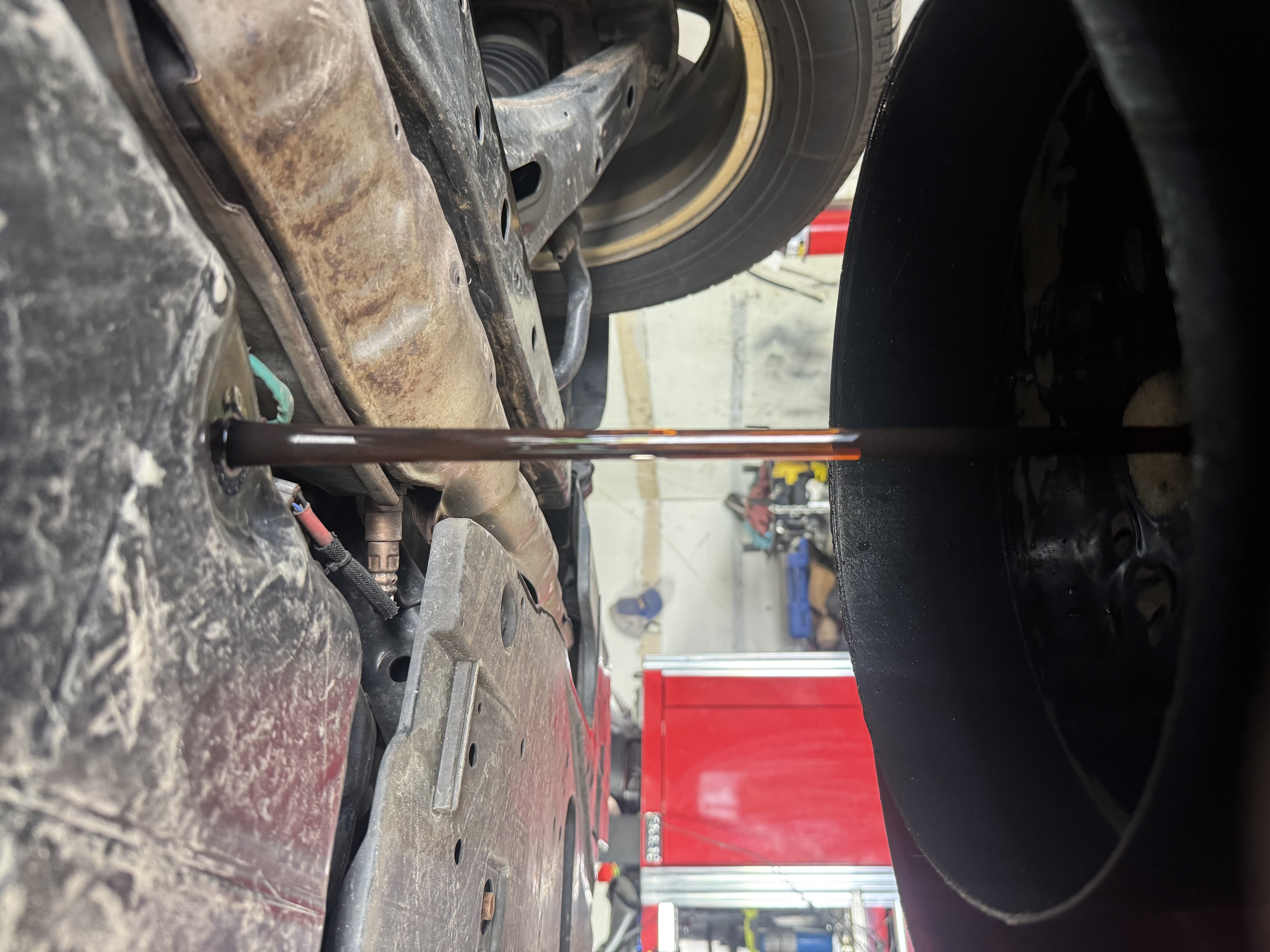
Explore why Subaru 3.6L CVT fluid darkens by 100k miles, the debate over 'lifetime' transmission fluid, and expert diagnosis and repair advice from Granby CT's College Highway Auto.
If you drive a Subaru Outback with the 3.6L engine paired with the CVT transmission requiring high torque fluid, you’ve probably heard Subaru’s claim that the transmission fluid is “lifetime” and never needs changing. However, when your vehicle hits around 100,000 miles, the reality can look very different. At College Highway Auto in Granby CT, we frequently see these fluids darken to a deep brown—far from the bright orange originally filled at the factory. This raises a critical question: is this truly lifetime fluid, or is it overdue for a service? In this article, we’ll dive into why we recommend a fluid inspection and likely replacement on Subarus with these CVTs, how the vehicle’s mileage and driving conditions affect fluid longevity, and the detailed diagnosis and repair steps we perform to maintain your Subaru’s transmission health. Serving Granby, Hartford County, Simsbury, East Granby, Suffield, and Windsor Locks, we want Subaru owners in our community to understand the importance of proper maintenance for the CVT high torque fluid and how it impacts the driveability, transmission lifespan, and long-term reliability of their vehicles.
Owners of Subaru Outbacks with the 3.6L engine and CVT transmission will often notice their transmission performs well for many miles, reinforcing the notion that the fluid inside is meant to last the life of the vehicle. However, by about 100,000 miles, symptoms may start creeping in subtly or become evident under certain conditions. One of the first and most obvious signs is the color and condition of the CVT transmission fluid itself. The factory fill is a bright orange fluid, designed to be highly heat-resistant and capable of handling the torque demands of this robust transmission. When the transmission fluid turns dark brown or even black, it suggests oxidation, heat stress, and possible contamination.
Though Subaru markets this fluid as lifetime, real-world experience in Granby CT’s climate and driving conditions demonstrates that high mileage and frequent heavy loads can deteriorate fluid quality. Aside from discoloration, fluid that is burnt or has a strong acrid smell often signals internal component stress or wear. Drivers may notice subtle shifts in transmission behavior such as hesitation during acceleration, unusual noises, or slipping under heavy throttle. These symptoms don’t always appear immediately but generally develop gradually as the fluid’s lubricating and cooling properties diminish.
Another common complaint encountered at College Highway Auto is erratic shifting or a lack of smoothness in the CVT’s variable pulley system operation. While these may be caused by other mechanical issues, poor fluid quality often contributes significantly. Sometimes owners assume the CVT is failing prematurely when a simple fluid exchange could restore smooth operation and prevent costly repairs. Given that this 3.6L CVT handles higher torque than the standard FA20 CVTs, maintaining proper fluid quality is essential to prevent metal wear, clutch pack damage, and overheating.
This Subaru model also tends to be driven in areas requiring stop-and-go city driving as well as highway miles, each affecting fluid differently. High heat cycles from mountain driving or towing compounded with stop-and-go traffic can accelerate fluid breakdown. The high torque fluid’s additive package is depleted over time, reducing its ability to prevent oxidation and protect friction materials inside the transmission. Ultimately, these symptoms are warning signs that the 'lifetime' fluid recommendation deserves reconsideration, especially if you plan to keep your Subaru well past 100,000 miles.
Diagnosing the condition of the Subaru 3.6L CVT high torque fluid requires a systematic approach carried out by experienced technicians here at College Highway Auto to ensure transmission health before committing to a fluid flush or deeper repairs. The following steps outline our comprehensive diagnostic protocol.
1. VEHICLE HISTORY REVIEW: We start by examining the vehicle’s service records and mileage (in this case approximately 100,000 miles). Subaru’s claim of lifetime fluid is widely known but we confirm how the driving conditions might have stressed the system (urban stop-and-go, mountainous terrain, towing). We also ask the owner about any transmission behavior changes.
2. VISUAL FLUID INSPECTION: Next, our technician removes the transmission fluid dipstick for a visual check. We assess the fluid color, clarity, and presence of any metallic particles or burnt smell. As noted, new Subaru 3.6L CVT fluid is bright orange and transparent. Dark brown or black fluid with sediment indicates oxidation and wear.
3. FLUID SAMPLE ANALYSIS: To gain a more detailed understanding, we collect a small fluid sample for laboratory testing. This can include measurement of viscosity, metal content (iron, copper, aluminum particles), and chemical breakdown of additives. Elevated metal traces indicate clutch or gear wear.
4. COMPUTER DIAGNOSTICS: Using Subaru’s selective service scan tools, we check transmission control module data and look for any stored trouble codes related to slip, pressure anomalies, or sensor failures. We monitor real-time parameters like input shaft speed, pulley ratios, and fluid temperature during a dynamic road test to detect abnormal behaviors.
5. ROAD TEST: We conduct a thorough road test replicating a variety of driving scenarios including acceleration from stop, steady highway speeds, and hill climbs to observe transmission responsiveness and detect slipping, surging, or noise.
6. PHYSICAL INSPECTION OF TRANSMISSION: If indicated by symptoms or fluid analysis, the transmission pan and filter are removed for direct inspection. We look for excessive shavings, clutch debris, or contamination that would confirm internal wear.
7. CONSULTATION AND RECOMMENDATIONS: After synthesizing all data points, we discuss with the customer whether a fluid change is required immediately, or if further repairs may be necessary. Because CVT high torque fluid is not designed to be serviced often, we explain the risks of neglect and benefits of preventive maintenance.
This diagnostic process requires precise knowledge of Subaru’s CVT transmissions, the characteristics of high torque fluids, and the local driving environment’s impact. At College Highway Auto, this enables us to provide Granby CT and greater Hartford County Subaru owners with clear, practical advice, and avoid unnecessary repairs while protecting their investment in these capable vehicles.
When we determine a Subaru 3.6L CVT’s high torque fluid shows signs of degradation, the repair process focuses primarily on performing a meticulous fluid exchange using the exact OEM specified fluid Subaru mandates. Due to the design of these CVTs, fluid changes must be thorough to avoid leaving old fluid that can mix, dilute, and reduce protection.
1. INITIAL SERVICE PREPARATION: The vehicle is safely lifted in our shop and allowed to cool if recently driven. We verify that the correct Subaru CVT high torque fluid (bright orange formula) is on hand. This fluid differs significantly from standard CVT or automatic transmission fluid due to torque capacity and friction characteristics.
2. DRAINING OLD FLUID: We remove the transmission drain plug or drop the pan carefully, collecting the entire drained fluid. Because the fluid often contains debris or oxidized particles, we will inspect the pan and magnetic drain plug for metal sediments.
3. FILTER REPLACEMENT: Subaru’s CVT design typically incorporates a transmission fluid filter or strainer accessible via the pan removal. Installing a new filter ensures contaminants don’t recirculate through the transmission post service.
4. CLEANING AND INSPECTION: The transmission pan is cleaned thoroughly, magnetic plugs are cleansed of metal fragments, and the filter seating area is inspected for damage or signs of overheating.
5. FLUSHING PROCEDURE: To minimize residual old fluid, we perform multiple flushes, introducing fresh fluid and draining repeatedly (either through a machine-assisted flush or manual fill/idle/drain cycles). This step is crucial to maximize the effectiveness of the fluid exchange.
6. REFILLING FLUID AND RESET: We refill the transmission with the precise Subaru high torque fluid quantity and verify the correct fluid level using the dipstick and transmission temperature guidelines. The transmission control module may require a reset or relearn procedure using Subaru’s scan tool.
7. POST REPAIR TEST DRIVE AND MONITORING: After assembly, we take the vehicle on a comprehensive road test replicating varied driving loads to confirm smooth shifting, absence of hesitation or noise, and verify the fluid temperature stays within optimal range.
8. CUSTOMER CONSULTATION AND EDUCATION: We inform the owner about maintaining this fluid by checking fluid levels and condition at regular intervals, considering periodic fluid changes especially for vehicles with over 100,000 miles or harsh driving conditions. Though Subaru refers to this as lifetime fluid, our experience in Granby CT shows changes at appropriate intervals help prolong the transmission’s service life.
While fluid replacement may resolve symptoms and improve transmission operation, if internal damage is extensive (detected in the diagnostic phase by metal debris or codes), further mechanical repairs might be necessary. Our focus remains on transparency and confirming failures before recommending major component replacements.
At College Highway Auto, these corrective steps ensure that Subaru drivers in Granby and nearby towns like Simsbury and Windsor Locks can trust their 3.6L CVT to operate reliably and smoothly for decades to come.
This issue matters profoundly for Subaru owners, especially in Granby CT and surrounding Hartford County towns, because neglecting CVT fluid health on the 3.6L transmission can lead to costly breakdowns down the road. Subaru’s claim of lifetime fluid understandably encourages owners to avoid the expense and inconvenience of transmission fluid changes. However, our real-world service experiences highlight how this may become a false economy.
The CVT on the 3.6L engine handles significantly higher torque loads than the base 4-cylinder models, demanding specialized high torque fluid with additives formulated to protect clutches, pulleys, and seals under stress. Over time, heat cycles, oxidation, and contamination degrade these additives, reducing the fluid’s ability to provide adequate lubrication and frictional characteristics. The result may be excessive metal wear, clutch slippage, or premature transmission component failure.
Fluid that is darkened or burnt also loses its capacity to dissipate heat efficiently, causing higher operating temperatures and accelerating wear. This is especially important in the Connecticut climate, where cold starts in winter and occasional summer heat stress put extra pressure on transmission fluids. Drivers around East Granby, Suffield, and Windsor Locks also often encounter stop-and-go traffic conditions that cause elevated transmission fluid temperatures and shorten fluid life.
Ignoring these symptoms or relying solely on manufacturers’ lifetime fluid claims can jeopardize your transmission’s reliability and resale value. At College Highway Auto, we emphasize proactive service tailored to your Subaru’s mileage and driving style. Educating our Granby access customers about the tangible benefits of fluid condition monitoring allows them to make informed decisions rather than waiting for breakdowns or expensive repairs.
By recommending fluid inspections and changes at appropriate intervals, we can extend the transmission life, improve shift smoothness, and avoid costly mechanical failures. This preventative approach aligns with our commitment to providing honest, expert advice rooted in years of Subaru CVT service experience. In the end, maintaining the right fluid freshness protects one of the most complex and expensive components on your Subaru 3.6L, turning a potential costly repair into a manageable maintenance task.
While Subaru markets the 3.6L CVT high torque fluid as lifetime, real-world experience in Connecticut’s varying climate and driving conditions shows that fluid quality can degrade significantly by 100,000 miles, warranting inspection and possible change to maintain transmission health.
Common signs include dark brown or black fluid instead of bright orange, burnt smell, unusual transmission noises, hesitation or slipping during acceleration, and erratic or rough shifts.
Old, oxidized fluid loses lubrication and friction-control properties, causing excessive wear of clutches and pulleys, overheating, transmission slipping, and ultimately costly repairs or transmission failure.
Stop-and-go traffic, mountainous terrain, extreme temperatures, and towing increase transmission heat cycles and stress, accelerating fluid degradation compared to moderate driving conditions.
It requires Subaru-specific high torque CVT fluid, which is bright orange with special additives designed for higher torque loads. Using the correct OEM fluid is critical for proper performance and longevity.
Choosing a shop experienced with Subaru CVTs and knowledgeable about Subaru high torque fluid is important, as incorrect fluid or improper service procedures can harm transmission performance.
While no official interval is published due to the lifetime claim, many Subaru specialists suggest checking fluid condition at 80,000-100,000 miles and performing a fluid exchange if degradation is evident, especially under strenuous driving.
It includes draining the old fluid, replacing the transmission filter if applicable, cleaning the transmission pan, flushing residual old fluid, refilling with OEM high torque fluid, and resetting transmission learning parameters.
Fluid change can resolve many issues related to degraded fluid but will not fix mechanical problems from worn clutches or damaged components. Proper diagnostic testing is essential before recommending major repairs.
Yes. Neglecting fluid degradation can lead to premature transmission failure, expensive part replacements, and labor costs, whereas fluid maintenance is a relatively affordable preventive expense.
Extended oil change intervals can cause engine oil degradation and sealing issues that may contribute to cross-contamination of engine oil and coolant passages in Subaru 3.6L engines, indirectly stressing the transmission. Regular synthetic oil changes at 3,000 miles are recommended.
Absolutely. College Highway Auto specializes in Subaru maintenance and repairs, serving Granby, Hartford County, Simsbury, East Granby, Suffield, Windsor Locks, and nearby towns with expert diagnostics and fluid services.